
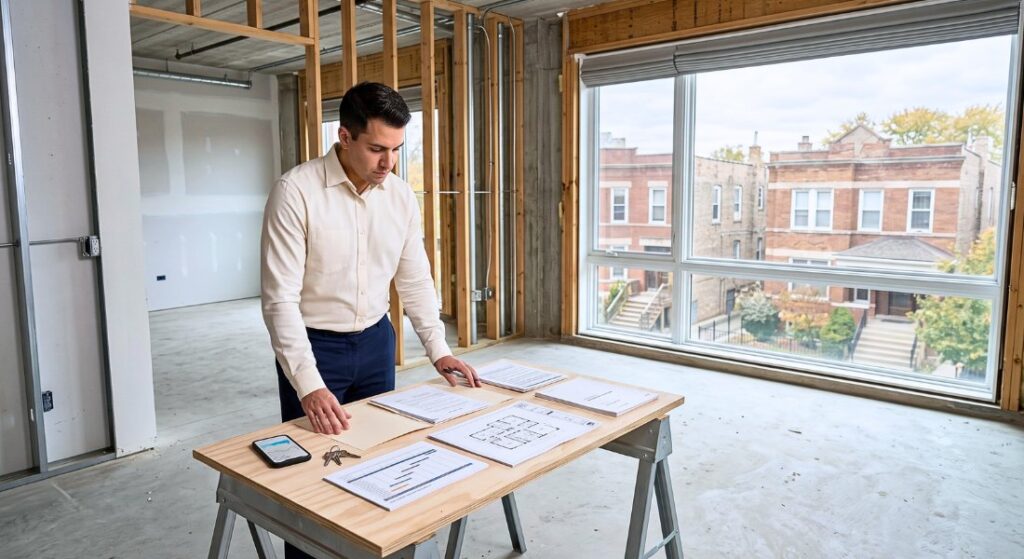
Rising rates and city permit delays can affect the time between signing a new construction contract and closing. For buyers, the math that worked on signing day may look different by closing. For developers, construction delays can affect financing costs, delivery schedules, and decisions about completed units. Understanding Chicago new construction deal structure can help both sides prepare for a successful closing.
Developer contracts in Chicago new construction often give builders greater flexibility over construction and closing timelines. When permit timelines stretch and construction milestones shift, buyers may face expiring rate locks, higher payments, and limited contract options. Independent buyer representation can help buyers understand those terms and manage changes throughout the purchase.
Three Contract Terms That Shape a New Construction Deal
Three contract provisions can significantly affect a Chicago new construction deal:
- Drop-dead Date: The contractual deadline that may establish the latest permitted delivery date or provide specific remedies for delays.
- Anticipated Closing Date: The developer's projected delivery target, which may change as construction progresses.
- Purchase Price: The agreed price that buyers should evaluate alongside financing costs and potential timeline changes.
These three elements are closely connected, and changes to construction schedules can affect the buyer's financing and overall costs.
When permit timelines stretch and construction milestones shift, buyers may need to revisit the financial assumptions they made when signing.
Chicago new construction contracts often give developers flexibility over construction and delivery schedules. Understanding that structure before signing helps buyers evaluate their obligations and negotiate terms that fit their circumstances.
The Impact of Permit Delays on Chicago Buyers
Chicago's Department of Buildings reviews construction plans and may require revisions before issuing the necessary permits. Each round of city-requested revisions can add time to the approval process, depending on the project's complexity and application status.
From a buyer's perspective, permitting status matters because delays can affect construction milestones and the anticipated closing date. Some projects have completed permitting before buyers sign, while others may still be working through parts of the approval process.
A buyer who locks a mortgage rate before closing may not be able to hold that rate throughout construction. Rate locks have expiration dates, and extending them can involve additional costs.
In a rising-rate environment, extending a lock or securing a new rate may change the buyer's original monthly payment calculations. Some lenders charge extension fees based on a percentage of the loan amount and the extension period.
The concern is straightforward: a developer's purchase contract may not protect buyers from every change in mortgage rates.
"The buyer thought they were going to spend X. It took nine months, rates went up, and X has now become X plus 10 percent. Rate locks will expire, and the developer has to make a choice. Do I extend this for another 60 days? There are a lot of moving parts in an environment where rates are rising, where the economy is uncertain, and buyers may walk away."
— Mario Greco, Founder, The MG Group
The financial impact of a canceled contract can affect both buyers and developers. If a buyer walks away, the developer may hold a unit customized with upgraded finishes and non-standard fixtures.
Those customizations can complicate resale because the property may appeal to a narrower group of buyers. The developer has already invested in those upgrades, while the buyer may have paid inspection fees, appraisal costs, and other expenses.
The buyer's potential loss of earnest money or other payments depends on the contract terms and circumstances surrounding the cancellation.
When New Construction Units Become Rentals
A canceled purchase can also leave developers with decisions about a completed or nearly completed unit. When a deal falls apart near completion during a rising-rate period, developers may consider relisting, adjusting the price, or converting the property to a rental.
"Any delay causes consternation on the sell side and uncertainty on the buy side. Developers and builders, a lot of them, work off lines of credit at fluctuating rates. The longer things take, the more uncertain things are. With the general opinion being that rates are rising, that can affect whether or not a builder even buys a piece of property for new construction, which leads to less inventory, which leads to higher prices. And then all of a sudden you have an absolutely stagnating market. That's the big problem with delays."
— Mario Greco, Founder, The MG Group
Converting a completed unit to a rental may be an alternative for a developer evaluating its options. Rental income can help support the property while the developer evaluates future market conditions and potential sales opportunities.
A building that shifts from planned sales to rentals is worth examining because the change may reflect financing, pricing, or market considerations. Chicago brokers can help buyers identify questions to ask about a property's sales and rental history.
For a closer look at Cook County's tax structure, read Chicago New Construction Property Taxes Catch Most Buyers Off Guard.
Buyer Representation in Chicago New Construction
Buying directly from a developer differs from purchasing an existing home, particularly when it comes to contract terms and construction timelines.
Chicago's infill market includes smaller projects, including three-flats, six-flats, and spec homes on individual lots. These transactions can involve more direct negotiations over contract terms, construction timelines, finishes, and closing arrangements.
Buyers should understand whom the developer's sales agent represents before discussing their financial or negotiating position. A developer's agent may represent the seller's interests and does not automatically owe buyers the same duties as their own representative. Under Illinois law, an agent's responsibilities depend on the applicable agency relationship and required disclosures.
A buyer's agent familiar with developer contracts can help identify how drop-dead dates, customization provisions, and financing timelines interact. That may involve negotiating terms before signing, discussing rate-lock strategies with the lender, or requesting developer concessions when circumstances change.
Navigating a Chicago new construction purchase requires understanding developer contract terms alongside the property's purchase price. Contact the MG Group team before signing to discuss the contract details and construction timeline for the property you're considering.
Managing Financing and Construction Delays
Buyers currently under contract on Chicago new construction should confirm their rate-lock expiration date and review the lender's extension options. If construction milestones shift, they should speak with the lender about financing options and adjust their plans as needed.
Buyers still evaluating new construction should consider permit and construction timelines when developing their financing strategy.
Developers and sellers operating in Chicago's infill market should communicate construction changes promptly to buyers and their representatives. Buyers who understand the reasons for a delay and the updated schedule are better positioned to adjust their plans.
The margin for unexpected financing costs can become smaller when construction timelines extend and borrowing rates change. Buyers and developers who plan for those possibilities have more flexibility when deciding how to proceed.
For condominium projects, buyers and attorneys should also review applicable Illinois Condominium Property Act disclosures and developer contract requirements. Those documents can help clarify ownership rights, project details, association responsibilities, and other matters relevant to the purchase.
For buyers considering the resale market as an alternative, the Chicago buyer's guide explains the purchasing process from preapproval through closing.
Chicago New Construction Questions Buyers Ask
How long does Chicago new construction typically take from contract to closing?
Some Chicago new construction purchases can take several months from contract signing to closing, depending on the project's construction stage. Permit revisions, construction schedules, and other project requirements can extend the timeline beyond the developer's original estimate. Buyers should plan their financing around realistic schedules rather than relying entirely on the earliest projected completion date. Asking a broker with Chicago infill experience to review timelines for comparable projects can provide useful context before signing.
What is a drop-dead date in a Chicago developer contract?
A drop-dead date is a contractual deadline that may establish the latest permitted delivery date or provide specific remedies for delays. Depending on the agreement, missing that deadline may give the buyer certain rights, including an opportunity to terminate the contract. Chicago developer contracts can provide flexibility around construction schedules, making it important to understand the exact terms before signing. An experienced agent and real estate attorney can help buyers review those provisions and discuss available protections.
What happens when a rate lock expires before new construction closes?
When a rate lock expires before closing, buyers may need to request an extension or obtain a new rate. In a rising-rate environment, either option can affect monthly payments and the overall cost of financing the purchase. Buyers should confirm the exact cost and availability of extensions with their mortgage lender before choosing a rate-lock period.
Can a buyer walk away from a new construction contract without penalty?
A buyer's ability to exit without penalty depends on the contract language, construction stage, and any remaining contingencies. Developer contracts often contain provisions addressing earnest money, cancellation rights, construction delays, and other potential costs. An attorney should review those terms before signing so buyers understand their rights if circumstances change. The Consumer Financial Protection Bureau's homebuyer resources provide additional guidance on financing and preparing for a home purchase.
Why would a developer convert a new construction building to rentals instead of selling?
Developers may convert newly constructed units to rentals when market demand changes, borrowing costs rise, or planned sales do not proceed. Rental income can support the property while future sales opportunities are evaluated. Buyers considering a building with a rental conversion history should ask why the project shifted from planned sales to rentals and review its transaction history.
What condo project review applies to newly constructed Chicago buildings?
New construction condo projects are subject to lender project eligibility and review requirements. The applicable review path depends on the project and loan circumstances. Fannie Mae and Freddie Mac have different review categories, exemptions, and waivers. Factors can include project completion, legal documentation, insurance, association information, and other eligibility requirements. Buyers should ask their lender which requirements apply to the specific building before assuming the unit will qualify for conventional financing. The article New Fannie Mae and Freddie Mac Rules Change Chicago Condo Buying explains additional requirements affecting Chicago condominium purchases.
How do rising rates affect Chicago's new construction inventory pipeline?
When interest rates rise, developers may face higher borrowing costs on construction loans and credit lines. Some developers may respond by delaying land purchases or adjusting the timing of planned projects based on expected buyer demand. These decisions can affect how quickly new properties enter the market.
What is the anticipated closing date in a developer contract, and how binding is it?
The anticipated closing date is the developer's projected delivery target, rather than necessarily being a guaranteed contractual deadline. Many Chicago developer contracts allow flexibility around that date, with the buyer's specific rights depending on the agreement. Buyers should compare the anticipated closing date with the drop-dead date and review the remedies available if construction runs late. Buyers should also build reasonable timing flexibility into their financing plans.
Plan for the Full New Construction Timeline
Buyers purchasing Chicago new construction should review financing costs and allow for possible timeline changes before signing. Understanding the developer's contract, anticipated closing date, and financing options can help buyers evaluate the purchase before committing.
Chicago's new construction market involves several moving parts, but careful preparation can make those details easier to manage. If you're considering new construction or already under contract, reach out to the MG Group to discuss your timeline, contract terms, and next steps.
ABOUT THE AUTHOR
Mario Greco | Founder, The MG Group at Compass | 24+ years, 5,080+ transactions, $2B+ in career sales | #1 Large Team in Chicago (RealTrends 2024) | #2 Team in Chicago (RealTrends 2025) | Top 1% since 2002 | JD, Boston University | BS Engineering, Northwestern