
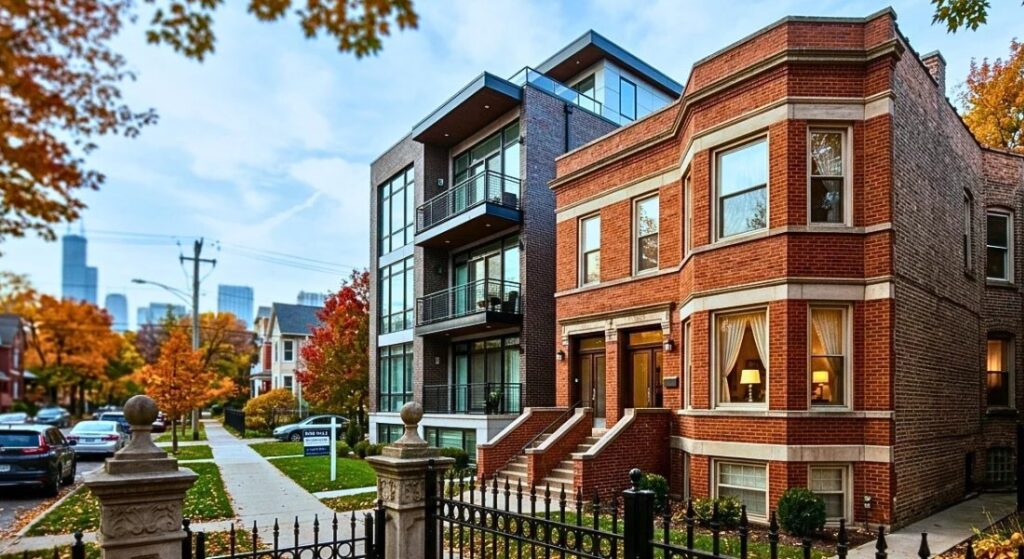
Chicago home prices have remained resilient despite elevated mortgage rates. That seems to defy basic economics until you understand what's holding supply back. Mortgage rate lock-in is one major factor keeping homeowners from listing. Life changes may prompt some rate-locked owners to sell, but inventory could remain constrained.
Limited listings shape Chicago's housing market, affecting buyer choices and competition for available homes. Affordability pressures may be pushing some buyers toward lower price ranges. A sustained increase in inventory could depend partly on whether more homeowners become willing or able to give up their low mortgage rates.
The Mortgage Rate Trap Keeping Chicago Homeowners in Place
One major factor limiting Chicago's housing inventory is mortgage rate lock-in. Millions of homeowners nationwide secured low rates during 2020 and 2021.
When rates climbed from historic lows to above 7% in 2022 and 2023, borrowing became significantly more expensive. Higher rates were expected to cool demand and put downward pressure on home prices.
What that reasoning overlooked: sellers have mortgages too. The Federal Housing Finance Agency found that homeowners are less likely to sell when the gap between their current mortgage rate and market rates widens.
A homeowner with a 3% fixed rate has a strong financial incentive to stay put. Selling means paying off the existing mortgage and potentially financing the next home at a much higher rate. Depending on the loan balance, that change can add hundreds of dollars to monthly payments. For some Chicago homeowners, the added cost makes moving financially difficult.
The Harvard Joint Center for Housing Studies also found that mortgage rate lock-in dampened the downward pressure of rising interest rates on home prices. Chicago-area inventory data can help establish how that broader effect relates to local market conditions.
Higher Rates Are Reshaping Buyers' Budgets
Buyer demand hasn't disappeared. Some buyers who still want to own a home are adjusting their budgets for higher borrowing costs instead of giving up on their plans.
“Counterintuitively, when rates go up as fast and as high as they have, the 3% mortgage that everyone was hanging on to is even more attractive. So fewer people are actually selling. And buyers who were committed to buying, who don't want to pay what the record rents are in Chicago, they still want to buy. Six and a half becomes seven and a half. Okay, instead of buying a $500,000 place, I'll buy a $400,000 place. Or instead of buying a million, I'll buy $800,000. But they're still going to move. So prices have yet to come down.”
— Mario Greco, Founder, The MG Group
That adjustment can keep transactions moving at lower price points while affordability pressures weigh on demand. Some price ranges could see declines, while the $2 million-plus market may prove less sensitive to mortgage rates.
The first-time homebuyer guide explains the financing basics for buyers comparing their budgets with current rates.
Why Haven't Chicago Home Prices Dropped?
Higher mortgage rates were expected to cool housing demand and put downward pressure on prices. Yet homeowners with low fixed rates have a strong financial incentive to stay put, limiting the number of properties coming onto the market.
That supply shortage helps explain why prices have remained resilient. In the second quarter of 2026, single-family home prices rose 5.7% year over year in Chicago. Price trends varied by neighborhood, with some areas recording declines. The latest price index provides a more detailed look at those differences.
The national mortgage rate shift adds context. The Consumer Financial Protection Bureau's analysis documents how rates climbed from 2.65% in January 2021 to 7.79% in October 2023, discouraging some homeowners from moving.
If you're evaluating what today's rates mean for your budget, contact the MG Group team to discuss your options.
How Low Inventory Affects Chicago Neighborhoods
Low inventory can affect Chicago neighborhoods in different ways, depending on the housing mix, price range, and availability of new construction. West Loop, Lincoln Park, Lakeview, and Wicker Park each offer a different view of how limited supply shapes buyers' options.
Wicker Park stands out for its rising price ceiling. Single-family homes approaching or exceeding $2 million would have been less typical there in the past. The neighborhood's proximity to the West Loop and its established cultural scene contribute to its appeal. A closer look at the area's housing market is available on the Wicker Park neighborhood page.
Lincoln Park faces its own supply constraints. When long-term owners hold onto their properties, fewer resale listings become available to buyers. That can limit their choices even when demand remains strong.
The Price Ranges Most Vulnerable to Softening
If price softening emerges, the entry-to-mid market could feel the effects as buyers become more sensitive to monthly payments. Affordability pressures may leave sellers with less room to push prices.
Some homeowners will eventually need to move because of job changes, relocation, estate matters, or other life circumstances. If more of those properties reach the market while buyers remain constrained by borrowing costs, certain price ranges could see more negotiating room. The timing and extent of any softening will depend on how local supply and demand evolve.
For buyers waiting for a price drop, the key question is which payment range fits their budget and has suitable homes available.
Chicago's Spring 2026 Market Is Moving Fast and the Numbers Prove It offers additional context on the demand supporting Chicago prices.
Common Questions About Chicago Housing Inventory
Why is Chicago housing inventory so low right now?
Mortgage rate lock-in is one factor limiting Chicago's housing inventory. Many homeowners secured rates near 3% in 2020 and 2021. Selling could mean replacing that mortgage with a loan at a substantially higher rate, increasing monthly payments and making a move less affordable. Some owners choose to stay put, reducing the number of existing homes available to buyers.
Will Chicago home prices drop if rates stay high?
Higher rates alone don't guarantee lower home prices. If available listings remain limited while buyers continue to compete for homes, prices may stay resilient. Some entry-to-mid-priced segments could experience more softening because buyers in those ranges are often more sensitive to monthly payments. The extent of any decline will depend on local supply and demand.
Are buyers still active in Chicago's real estate market?
Yes, although higher borrowing costs can change what buyers can afford. Some buyers adjust their budgets and target less expensive properties rather than leave the market altogether. Others may delay purchasing if the available homes and monthly payments don't fit their needs.
Which Chicago neighborhoods are seeing the most activity right now?
West Loop, Lincoln Park, Lakeview, and Wicker Park are important areas to examine, but activity can vary by property type and price range. Current listing counts, pending sales, and days on market would help identify which neighborhoods are moving fastest. Wicker Park is performing particularly well, with single-family homes approaching or exceeding $2 million.
How does new construction affect Chicago home prices during a low-inventory period?
New construction adds housing options, but it doesn't necessarily increase the supply of existing homes for resale. When new homes are limited relative to buyer demand, competition for available properties can support prices. The effect on nearby resale values varies by location, property type, and price range. The article "New Construction Math Makes Timing More Important" explores the financial considerations involved in buying new construction.
When might Chicago see more homes come onto the market?
The timing is difficult to predict. Some homeowners may sell because of relocation, retirement, estate matters, divorce, or other life changes, despite giving up a low mortgage rate. More listings could ease supply constraints, but the pace will depend on how many owners decide or need to move and how buyer demand changes.
What is the mortgage rate lock-in effect, and how long does it typically last?
Mortgage rate lock-in occurs when homeowners are reluctant to sell because a new mortgage would carry a higher interest rate than their existing loan. The effect can weaken when mortgage rates fall closer to existing rates or when life circumstances prompt more owners to move. There is no fixed timeline; its duration depends on rate changes, household needs, and local market conditions.
Is now a good time to buy in Chicago despite high rates?
That depends on your finances, monthly payment comfort, and how long you expect to own the home. Buyers should evaluate the total cost of ownership and make sure the payment is manageable at today's rates. Refinancing may become an option if rates fall, but future rates and refinancing costs are uncertain. Waiting may offer more choices if inventory improves, though prices and competition can also change.
Put Chicago's Market Conditions in Perspective
Chicago's inventory shortage affects buyers and sellers differently. Homeowners with low mortgage rates have real financial reasons to stay. Buyers must weigh current borrowing costs against the limited homes available in their price range.
Your budget at today's rates may look different than expected, and your home's current market value may surprise you, too. Start a conversation with the MG Group to discuss your options and the numbers that matter for your situation, with no obligation.
ABOUT THE AUTHOR
Mario Greco | Founder, The MG Group at Compass | 24+ years, 5,080+ transactions, $2B+ in career sales | #1 Large Team in Chicago (RealTrends 2024) | #2 Team in Chicago (RealTrends 2025) | Top 1% since 2002 | JD, Boston University | BS Engineering, Northwestern