
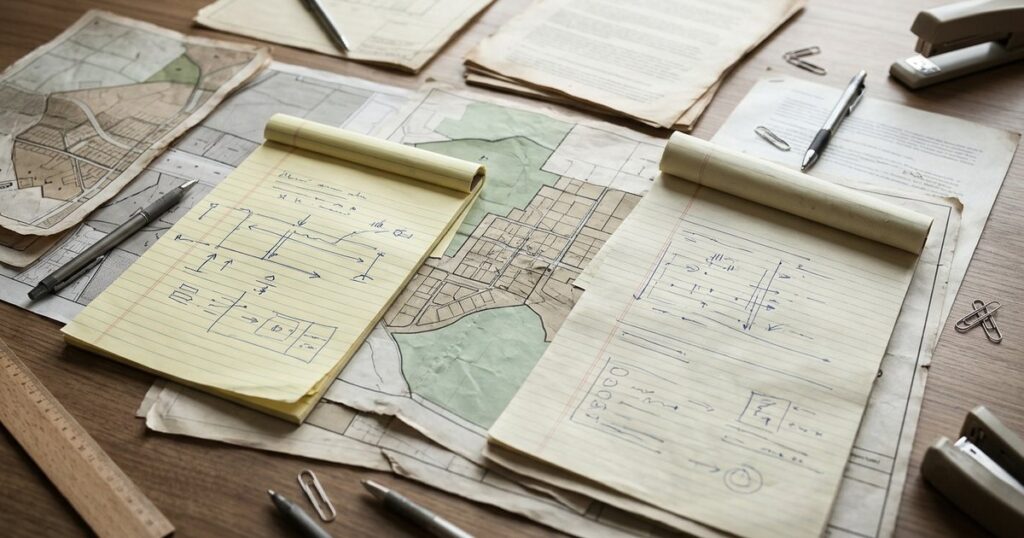
Chicago zoning determines a property's potential uses, while its current use reflects what occupies it today. That distinction affects development feasibility, renovation timelines, and whether a deal remains viable before earnest money becomes nonrefundable. Buyers who assume a property's existing use is permitted risk signing contracts for plans they cannot legally carry out.
A retail building may carry a century-old manufacturing designation. A parking lot may already be zoned residential. These differences can reveal opportunities or restrictions that a property's current appearance won't show. Before committing to a purchase, buyers should verify the zoning classification, permitted uses, and approval requirements for their intended plans.
What a Former Gas Station Has to Do With Your Deal
Environmental history can affect a Chicago property purchase long before construction begins. A parking lot on a former gas station site may carry contamination risks. A retail strip on former industrial land may face different environmental concerns.
For buyers planning demolition, renovation, or foundation work, environmental due diligence helps identify potential contamination. Historical records can reveal previous uses of the site.
A former gas station may have underground storage tanks. A former dry cleaner may have left solvent contamination. A former body shop may have created chemical contamination. These risks can affect cleanup costs, financing, and development plans.
A Phase I Environmental Site Assessment reviews a property's environmental history and potential contamination risks without soil or groundwater sampling. It examines historical records, aerial photographs, Sanborn fire insurance maps, and regulatory databases. Sellers may commission one proactively to help buyers assess environmental risks. Buyers should complete due diligence within their contractual deadlines and understand their rights if concerns arise.
If a Phase I identifies potential contamination, a Phase II assessment may be warranted. It typically involves soil or groundwater sampling to investigate specific concerns. The work can add significant costs and time to a transaction, making deals much harder to complete.
The Gap Between Current Use and Zoning Limits
Consider a retail storefront on Chicago's Near West Side that has operated for a decade. You might assume it's zoned for commercial use. In Chicago, that assumption can be unreliable.
The storefront could sit on land zoned for manufacturing, even if that designation predates the current building.
The United Center corridor illustrates the scale of change zoning can enable. The 1901 Project will redevelop roughly 55 acres of surface parking lots into a mixed-use district with housing, retail, entertainment, hotels, and public spaces.
A property's current use doesn't necessarily reflect what its zoning permits. Chicago's zoning code establishes permitted uses and development standards, although some existing uses may be legally nonconforming. Buyers should verify both the current zoning classification and any restrictions affecting their plans.
"Zoning in Chicago is about future use, not present use. You can have a retail site on Grand Avenue that used to be a gas station. You need to know that, even though there isn't one there now, even though the zoning doesn't say it. There's a building around the corner from me that's been a retail shop for ten years. When someone buys it and wants to tear it down and put up condos, that land has been zoned manufacturing for a hundred years. It doesn't matter what was on there before. It's what the zoning says can be there going forward."
— Mario Greco, Founder, The MG Group
Three Due Diligence Checks for Chicago Property Buyers
For Chicago properties with redevelopment potential or unusual site histories, buyers should investigate zoning and environmental risks early in the purchase process.
1. Check the Land History
County records, Sanborn fire insurance maps, and environmental databases can reveal previous site uses, sometimes going back generations. A parking lot may occupy land previously used for industrial or commercial purposes.
2. Verify the Current Zoning Designation
Check the property's zoning classification using the City of Chicago's zoning map and compare it with your intended use. If the proposed project isn't permitted, determine whether a zoning change or other approval is needed. Ask your attorney or zoning professional about the likely timeline, required reviews, and local political considerations.
3. Commission a Phase I Environmental Site Assessment
Commission a Phase I assessment early enough to address potential contamination within the applicable contract deadlines. Attorney review and other contingencies may have separate timelines, so buyers should confirm their rights with their real estate attorney. If the assessment identifies concerns, the contract's terms will determine whether further investigation, renegotiation, or termination is possible.
Not sure what your intended use requires under Chicago zoning? Contact the MG Group team to discuss your plans before committing to a property.
Redevelopment Opportunities and Zoning Risks
Chicago's industrial corridors continue to attract redevelopment interest. Around the United Center, Kinzie Industrial Corridor, Pilsen, and the Near South Side, buyers may find industrial properties near residential developments. A property's zoning and approval requirements depend on its specific location and proposed use.
Understanding that gap can reveal redevelopment opportunities. Misreading a property's zoning can lead to costly assumptions about what is possible.
Even a seemingly straightforward purchase, such as a corner lot, an underpriced two-flat, or a warehouse with renovation potential, deserves careful due diligence. Property listings rarely reveal every zoning restriction or environmental concern. For more context, read the Chicago property type hierarchy breakdown.
Zoning and Environmental Questions Answered
What is the difference between current use and permitted use in Chicago zoning?
Current use describes how a property is used today. Permitted use describes the activities allowed under its zoning classification. A retail building may sit on land zoned for manufacturing. Buyers should verify whether their intended redevelopment is permitted or requires additional approvals.
How do I find out what a Chicago property is zoned?
Search the property's address using the City of Chicago's zoning map. The map identifies its zoning district, which helps determine permitted uses and development standards. Verify the designation directly rather than relying on the property's current use or listing description.
What is a Phase I Environmental Site Assessment?
A Phase I Environmental Site Assessment reviews a property's history and other records to identify potential environmental contamination. It examines historical maps, aerial photographs, and regulatory databases without collecting soil or groundwater samples. ASTM E1527-21 is the standard recognized by the U.S. Environmental Protection Agency for meeting its All Appropriate Inquiries requirements.
When should a buyer order a Phase I in Illinois?
Order a Phase I Environmental Site Assessment early in the purchase process. The deadline for completing due diligence depends on the purchase contract and its contingencies. Ask your real estate attorney how to protect your options if the assessment identifies potential contamination. Understanding Illinois attorney review and contract deadlines can help buyers plan their due diligence.
What happens if a Phase I flags a problem?
If a Phase I identifies potential contamination, an environmental professional may recommend a Phase II assessment. This typically involves soil or groundwater sampling to investigate specific concerns. The findings can affect cleanup costs, financing, project timelines, and negotiations. Buyers should understand these risks before committing to redevelopment plans.
Can a buyer get a zoning change in Chicago?
Yes. Buyers can seek a zoning change, but approval is not guaranteed. The process may involve city review, public input, and City Council action. Timelines vary with the proposed change, application requirements, and community response. Before purchasing, determine whether the intended project is allowed under current zoning or requires additional approvals.
Why does Chicago have manufacturing-zoned land in residential neighborhoods?
Chicago's industrial history has shaped its zoning patterns. As neighborhoods evolved, some former industrial areas developed alongside residential uses. Current zoning can therefore differ from the surrounding neighborhood's character. Buyers should check individual parcels rather than infer permitted uses from nearby buildings.
The Work That Separates a Good Investment From an Expensive Lesson
Every development-adjacent purchase deserves careful research before a buyer commits. Chicago’s layered history can leave zoning restrictions and environmental concerns that a listing description won’t reveal. Buyers who investigate early can make more informed decisions and avoid costly surprises during or after closing.
Considering a Chicago property with development potential or an unusual site history? Connect with the MG Group before your due diligence deadlines pass. A conversation can help identify zoning questions to resolve and potential environmental concerns to investigate.
ABOUT THE AUTHOR
Mario Greco | Founder, The MG Group at Compass | 24+ years, 5,080+ transactions, $2B+ in career sales | #1 Large Team in Chicago (RealTrends 2024) | #2 Team in Chicago (RealTrends 2025) | Top 1% since 2002 | JD, Boston University | BS Engineering, Northwestern