
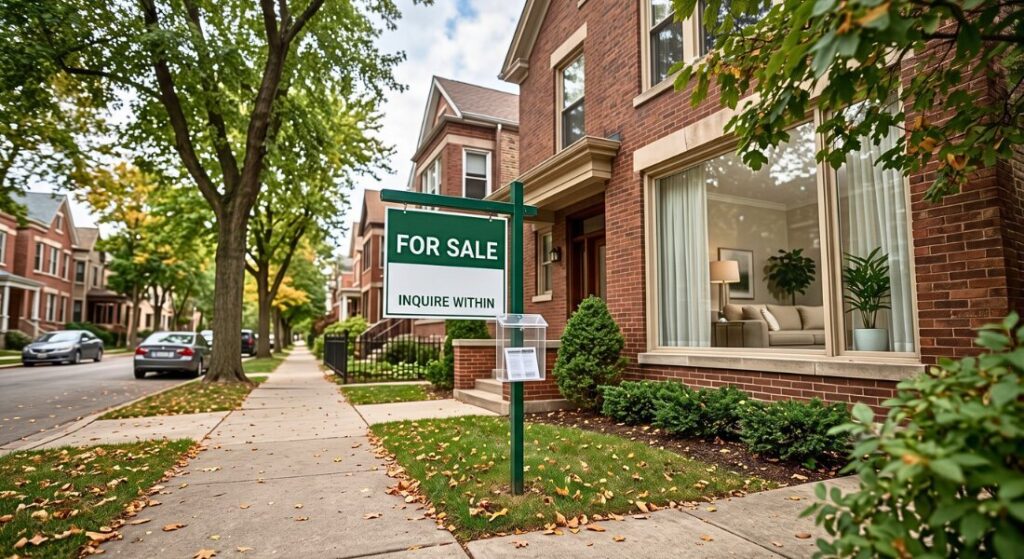
Chicago's late-summer slowdown is real, but 2026 brings a more complicated set of market conditions. Elevated mortgage rates continue to weigh on affordability, while limited inventory is keeping competition uneven. Economic uncertainty is also making some buyers more cautious about major financial decisions. The result is a market where property quality, pricing, and buyer readiness matter more than they might during a typical August.
Well-priced homes in desirable Chicago locations can still attract strong interest, while overpriced listings may sit longer. Sellers need to price for today's buyers rather than wait for conditions to improve. Buyers who complete their financing, inspections, and other preparation now can move faster when the right property appears. Both sides can use the late-summer period to prepare for the stronger activity that often returns later in the year.
This Is No Ordinary August Slowdown
Elevated mortgage rates are adding pressure to an already inventory-constrained market. That combination changes the calculus for both sides of a transaction. Buyers have less urgency when financing costs remain high, while sellers have less room for pricing mistakes.
Activity is becoming more uneven across Chicago and its suburbs. Well-positioned homes can still attract strong buyer interest, while poorly priced or under-prepared listings may struggle to generate showings. That split is a clear sign that this market rewards precision above all else.
For buyers, the opportunity is more selective than broad. Some overpriced or poorly positioned listings may offer room to negotiate, even as desirable homes remain competitive. For sellers, the harder truth is that the market has changed its behavior. Pricing and presentation matter more when buyers face higher financing costs.
What Chicago's Market Is Showing
Mario Greco has watched Chicago cycle through recessions, rate shocks, and political uncertainty for more than two decades. His current read is direct and specific:
"The seasonal slowdown is in full effect. However, because of the interest rate increases that have been large and quick, the slowdown is even more pronounced than in most late summers. Deal velocity and deal numbers are down significantly in Chicago and the suburbs. Anything well-located, well-marketed, and priced not egregiously is still selling quickly, likely with a couple of offers, but not twelve. Anything not marketed, that doesn't show well, or sits in an undesirable location, the showings have even disappeared. Uncertainty breeds reticence, and people don't want to do anything until they know what's coming."
— Mario Greco, Founder, MG Group at Compass
Mario's observations point to a more selective market rather than a uniformly frozen one. Strong properties can still move quickly, while weak positioning creates a much steeper penalty. For both buyers and sellers, preparation matters more when uncertainty makes every transaction feel less urgent.
Sellers Should Price to Today's Buyer
Comparable sales from six months ago are now historical data, not automatic pricing benchmarks. The same applies to 20-percent-over-asking results and 48-offer weekends from that period. Those outcomes should not become a pricing floor for a home entering the market in August 2026.
Buyers operating under today's rates have tighter monthly budgets and less urgency. They can recognize overpriced listings quickly and may choose to wait. As days on market accumulate, buyers may begin questioning whether the price reflects the property's condition or location.
Mario Greco puts the comp-adjustment reality plainly:
"Comps matter more than they did six months ago. Buyers are not as eager to just throw caution to the wind. So despite what a comp may say happened six months ago, we may come in a decent amount under that price."
— Mario Greco, Founder, MG Group at Compass
Strategic pricing from day one protects two things: your timeline and your net proceeds. Meeting buyers where they are now matters more than anchoring to where they were eighteen months ago. Sellers weighing whether to adjust or hold can review their selling strategy before moving forward.
Don't Waste the Fall Waiting
For sellers without an urgent deadline, waiting until after the holidays can be a reasonable strategy. The key is not to waste the fall while waiting. Use those quieter months to prepare, not simply wait.
The late-fall and early-winter window serves two purposes for a patient seller. Chicago's market typically sees renewed activity after the new year as buyers re-enter the market. The preparation period also gives sellers time to declutter, stage, photograph, and complete repairs without juggling holiday obligations.
A disciplined launch can be stronger than rushing an unprepared home onto the market. The calendar is a tool, and sellers can use it deliberately.
If the timeline is genuinely flexible, use August and September to get the home truly ready. Then consider listing after the holidays when buyer activity typically begins to pick up again.
Not sure whether to list this fall or wait until after the holidays? Talk with the MG Group team about your timeline and current market position before deciding.
Where Buyers Have More Leverage
Buyers often assume a slower market automatically means safer or simpler. Chicago's late-summer market is more nuanced. Slower activity can create opportunities, but buyers still need to understand where leverage actually exists.
Competition has eased from the peak pandemic years, especially on less desirable listings. That can create negotiating room for prepared buyers, while desirable homes can still attract competition. Tight inventory also means buyers cannot assume they will have unlimited choices.
Some October and November listings will be homes that struggled to sell earlier in the year. Buyers should examine why those properties remain available, whether the issue is price, condition, location, or marketing. Waiting for new inventory can bring more choices, but there is no guarantee the right property will appear on schedule.
The strategic move is to start looking now, with a clear purpose. The goal isn't to buy something that isn't right, but to understand the market, sharpen your criteria, and get financing fully in place. Buyers who complete that pre-work can act decisively when the right property appears. Preparing for the buying process can help you enter the market ready to move.
Why Buyers Should Start Preparing Now
Perfect timing matters less than preparation in today's market. Buyers who complete the work early can move decisively when the right property appears.
Rate uncertainty is real, but buyers have different financial circumstances and financing needs. What matters most is knowing what you can comfortably afford and what you are willing to buy. That means confirmed financing, defined criteria, and a clear sense of which neighborhoods and price bands offer value.
Chicago's market is not frozen so much as increasingly selective. Buyers who prepare now can study available properties without pressure, identify where sellers have flexibility, and recognize opportunities when they appear.
Waiting passively can leave buyers scrambling when competition returns. Starting now creates time to understand the market, refine the search, and be ready to act. Comparing conditions across Chicago neighborhoods can give buyers a more useful picture than relying on citywide averages alone.
Chicago's Late-Summer Market FAQs
Is the Chicago late-summer real estate slowdown in 2026 worse than normal?
Chicago's late-summer market is facing more pressure than normal seasonality alone would suggest. Elevated mortgage rates, limited inventory, and buyer uncertainty are contributing to a more selective market. The impact varies by neighborhood, property type, and price point.
Are Chicago homes still getting multiple offers right now?
Yes, some Chicago homes are still receiving multiple offers. Desirable properties that are well-positioned and priced realistically can attract strong competition. However, bidding conditions are generally less extreme than during the peak years of 2021 and 2022. Preparation and pricing are doing more of the work that a hot market once did automatically.
How much should a seller discount relative to six-month-old comps?
There is no fixed number because every property, block, and condition level is different. Buyers today may be more rate-sensitive than buyers were when those comparable sales closed. Sellers should use recent comps as evidence, then adjust for current competition, inventory, condition, and buyer affordability. An older comp may still be relevant, but it should not automatically become the property's pricing floor.
Why does fall inventory in Chicago often disappoint buyers?
Some October and November listings are homes that struggled to sell earlier in the year. Buyers should understand why those properties remain available, whether the issue is price, condition, location, or marketing. At the same time, buyers should not assume every fall listing is stale. Waiting for new inventory after the holidays may bring different options. But there is no guarantee the right property will appear.
What financing steps should Chicago buyers complete before January?
Get fully pre-approved rather than relying on a basic pre-qualification. Lenders may review income, assets, debts, and credit, with specific requirements varying by lender and loan type. A strong pre-approval can make an offer more credible when competing against other prepared buyers. Run your budget at today's rates, define your criteria, and know your comfortable ceiling before making an offer.
Should Chicago buyers lock a rate now or wait for rates to drop?
Rate timing is a mortgage decision, not a real estate decision. A mortgage professional can model your specific scenario and explain the costs of different options. Comparing mortgage offers can also help you evaluate interest rates, loan terms, fees, and monthly payments across lenders. Waiting for lower rates could bring more buyers back into the market, potentially increasing competition for desirable homes. A real estate agent can help with market timing, but the rate decision itself belongs with your lender.
Turn Market Uncertainty Into a Plan
Uncertainty is real, but it does not have to be paralyzing. Understanding your market position and next options can turn hesitation into a plan. The right move depends on your property, timeline, financing, and local market conditions.
Trying to make sense of where you stand? Connect with the MG Group to discuss your timeline, whether you're selling, buying, or still weighing your options. Bring your questions and numbers, and get a straightforward assessment of your next move.
ABOUT THE AUTHOR
Mario Greco | Founder, The MG Group at Compass | 24+ years, 5,080+ transactions, $2B+ in career sales | #1 Large Team in Chicago (RealTrends 2024) | #2 Team in Chicago (RealTrends 2025) | Top 1% since 2002 | JD, Boston University | BS Engineering, Northwestern