
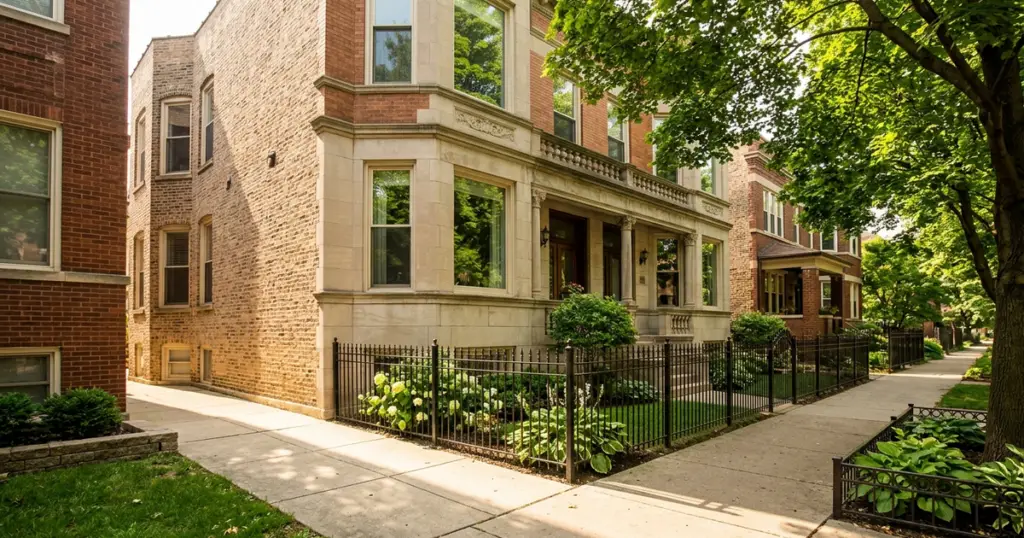
Remarkably, Chicago area home prices lead the nation in year-over-year appreciation. Yet the buying experience feels dramatically different than it did just a few months ago. Walk into an open house in Bucktown on a Saturday morning, and the crowds may be gone. Submit an offer in Oak Park, and you might be competing with just one other buyer.
The Chicago summer real estate market of 2026 has moved beyond the frenzy of spring. Buyers are more selective, negotiation is back in play, and success now depends more on strategy than speed. Understanding that shift is one of the biggest advantages buyers and sellers can have today.
Chicago ranked first among major U.S. cities for year-over-year home price appreciation in the December 2025 S&P CoreLogic Case-Shiller Index. That was nearly double the rate of second-place New York. Inventory remains near a 14-year low, but buyer urgency has eased considerably since spring. Today’s market rewards preparation, strong terms, and clean execution more than aggressive pricing alone.
What the Numbers Say vs. What We See
The numbers confirm what agents see in the field. The S&P CoreLogic Case-Shiller Index for December 2025 ranked Chicago first in the country for year-over-year appreciation. Inventory remains near a 14-year low, while sales volume is tracking at levels last seen in 2012.
On paper, those numbers point to a strong seller’s market. In reality, the pace has changed. Buyers who rushed to submit offers in spring are taking more time. The terms separating competing offers now often matter more than the price. Both realities exist at the same time, making strategy more important than ever.
Why Buyers Are Hitting the Brakes
Weakening market fundamentals don’t drive the shift. Chicago home prices continue to rise, and inventory remains historically low. What’s changed is buyer urgency.
Seasonality is part of the story. Summer vacations, school breaks, and the typical slowdown in late June naturally reduce transaction activity. Something else is happening beyond the calendar, too.
Buyers who felt intense competitive pressure in April have recalibrated their risk tolerance. They’re spending more time evaluating listings, looking more closely at individual properties, and waiting longer before submitting offers.
That recalibration creates opportunities on both sides. Prepared buyers who can move decisively are positioned to win. Sellers who recognize the concession conversations they dismissed in a ten-offer market now carry real weight.
The One Deal that Cracked the Code
Mario Greco has spent more than two decades reading Chicago’s market through live transactions. He founded the MG Group, the #2 medium sized team in Chicago according to RealTrends 2026. He tracks buyer behavior through active deal flow across more than 20 neighborhoods.
“Buyers aren’t jumping through every single hoop as fast as they can to get a property. Two months ago, there would have been a parade of offers, people out the door for open houses, and we would have competed with eleven, twelve offers. Instead, we competed with one other. We ended up getting it over list price, and we won because our terms were better. Things are not slowing. Buyers just aren’t panicking.” – Mario Greco, Founder, The MG Group at Compass.
That Oak Park transaction reflects how deals are getting done this summer. The winning offer was the cleanest. It waived the mortgage contingency, accepted the property as is, and included terms designed to eliminate friction for the seller. In today’s market, that precision often matters more than a higher price.
Success is less about speed and more about structuring the right offer. Connect with the MG Group team to build a winning strategy before you write your next offer.
How Small Details Are Killing Deals
The cooling doesn’t stop at open-house foot traffic. It shows up in transactions that should already have been completed. The late-stage friction is where the shift gets expensive.
Consider one active listing. It sits two months past attorney review and well into the closing process. The deal has stalled for three days over whether automatic window blinds work properly. The seller wants to repair them. The buyer wants a credit. Three days later, neither side budged, putting the closing at risk.
That’s the reality of Chicago’s summer market. Buyers may no longer be rushing to make offers, but they’re paying closer attention to the details. Small issues that once would have been overlooked now receive far more scrutiny.
For sellers, the takeaway is clear. Flexibility on credits, repairs, and closing timelines can keep a transaction moving. In today’s market, preserving a deal often matters more than winning every point in a negotiation.
Chicago’s Housing Fundamentals Remain Strong
A slower pace is different from a falling market. That distinction matters because confusing the two leads to poor decisions for both buyers and sellers.
“I went to an open house this past Saturday, got there at 11:15, and we were the only ones in the house. Two months ago, there had been a line out the door. The same buyers I’m working with had marked favorites as long as 30 days ago, and more than half of them are still available. That would not have happened three months ago. But Chicago is still the number one city in the country for appreciation year-over-year, almost double the next one.” – Mario Greco, Founder, The MG Group at Compass.
The fundamentals remain strong. Home prices continue to climb, inventory remains tight, and demand in Chicago’s core neighborhoods is resilient. What’s changed is buyer urgency, and that shift creates opportunity.
Buyers who are prepared to act can compete more effectively when the right property becomes available. Sellers, meanwhile, should recognize that today’s market rewards flexibility without requiring major price cuts.
How to Navigate a Constrained Market
Summer 2026 rewards preparation over speed. Clean pre-approvals, well-structured decisions, and precise offer terms are outperforming raw price in head-to-head competitions. You do not need to panic or overpay. You need to execute without friction when inventory is this constrained.
The buyers winning deals today share three traits:
- They know their financing inside and out.
- They understand which contingencies protect them and which ones weaken their offer.
- They work with an agent who can accurately assess a property’s competitive landscape.
With fewer bidding wars, preparation matters more than the willingness to escalate.
The Illinois attorney review period is another advantage for prepared buyers. Used strategically, it protects your interests without creating unnecessary delays for the seller.
Want to know what a competitive offer looks like in today’s market? The MG Group’s buyer resources walk through the process from pre-approval to closing. It’s a straightforward way to see the whole path before you start.
Keeping Your Sale on Track
Well-positioned homes in Chicago still sell above list price. What has changed is the negotiation after a buyer goes under contract. The price still holds. But the give-and-take after acceptance is where summer feels different than it did in spring.
Sellers who enter the process with realistic expectations are more likely to close on schedule. Those who treat every credit request like it’s still April’s market risk watching deals stall. The window blinds standoff is a perfect example.
Present the property well, price it accurately from the start, and decide in advance which concessions are worth making. That’s how successful sellers are navigating this summer.
The market hasn’t turned against sellers. It simply rewards flexibility where spring rewarded leverage. Experienced Chicago agents who’ve worked Chicago’s move-up market have seen this cycle before. Today’s market is simply a return to more balanced negotiations after the intensity of the past two spring markets.
Chicago Summer Market Questions Answered
Is the Chicago housing market slowing down in summer 2026?
Buyer activity has pulled back from spring 2026 levels, but the market’s foundation remains strong. Chicago ranked first nationally for year-over-year price appreciation in the December 2025 S&P CoreLogic Case-Shiller Index. The summer slowdown reflects seasonal patterns and reduced buyer urgency, not a decline in underlying value.
Why is Chicago housing inventory still so limited?
Chicago’s inventory shortage is driven by long-term structural factors. Zoning restrictions and the permitting process continue to slow new construction in many high-demand neighborhoods. As a result, the number of available homes remains at a historically low level, even as buyer activity cools during the summer.
What makes an offer competitive in the Chicago summer real estate market?
Clean terms often matter more than a higher price. Strong pre-approval documentation, flexible closing timelines, and reduced contingency exposure all help. Where appropriate, an as-is purchase can also strengthen your position. The goal is to remove friction for the seller rather than bid higher.
How long does the summer slowdown typically last in Chicago?
Chicago’s seasonal slowdown generally runs from mid-June through late August. Transaction volume picks up again after Labor Day, once school schedules stabilize. Sellers who held listings over the summer reassess pricing, and buyers re-engage with more urgency.
Should I wait until fall to buy in Chicago?
Waiting until fall means competing against buyers who re-engage after Labor Day, often increasing competition. If you’re financially prepared to buy now, summer offers fewer competing buyers and more time to evaluate properties. For many buyers, that creates a better opportunity to negotiate favorable terms and make more informed decisions.
How can Chicago sellers keep a deal together in today’s market?
Price accurately, present the property well, and set realistic expectations for inspection credits and minor repairs. Buyers in summer apply more scrutiny to deal details than they did in spring. Treating reasonable requests as dealbreakers, rather than as part of normal negotiation, kills transactions this time of year.
What should sellers do differently in the summer Chicago market?
Price accurately from the start, present the property well, and enter negotiations with realistic expectations on inspection credits and minor repairs. Buyers in summer 2026 apply more scrutiny to deal details than they did in spring. Treating reasonable requests as dealbreakers, rather than as part of normal negotiation, is what kills transactions at this time of year.
How does the attorney review period affect deals in a slower market?
In a slower market, buyers use the attorney review period more actively. They request repairs, credits, and clarifications they might have waived in a competitive spring. Sellers who understand this going in can respond strategically rather than reactively. The same staged, three-window listing approach gives sellers more control over how these negotiations unfold.
Does the summer slowdown affect all Chicago neighborhoods equally?
No. Tightly supplied neighborhoods with strong schools and transit often maintain more competition even during summer. Outer neighborhoods and suburbs typically feel the seasonal slowdown more. Real estate conditions can vary significantly block by block, making neighborhood-specific data more valuable than broad market trends.
Get Ahead of Chicago’s Changing Market
The shift is real, and so is the opportunity. Chicago’s strong appreciation, limited inventory, and changing buyer behavior all point to the same conclusion. Preparation and precision win this market.
Want to know where your property currently stands? Schedule a strategy session with the MG Group. Our team will provide a clear market read, the latest numbers, and a strategy built around your goals.
ABOUT THE EXPERT
Mario Greco | Founder, The MG Group at Compass | 24+ years, 5,080+ transactions, $2B+ in career sales | #2 Team in Chicago (RealTrends 2025) | Top 1% since 2002 | JD, Boston University | BS Engineering, Northwestern