Cook County's assessment rules can create very different tax outcomes for new construction and gut renovations. Many buyers pricing out a distressed property run the construction numbers first. They may overlook the Cook County tax math, and that sequencing error can get expensive fast.
Cook County's triennial reassessment cycle is only part of the tax picture for new construction and major renovations. Significant improvements can also trigger property-specific reassessment. The property's post-construction value can therefore change the long-term tax burden. Buyers who model only construction costs are working with an incomplete picture.
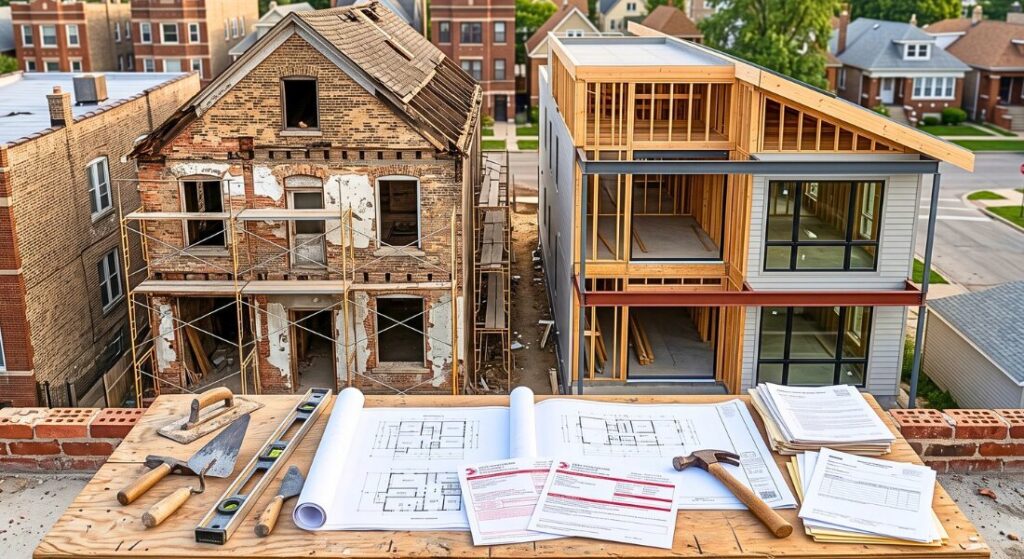
Teardown vs. Gut Renovation Comes Down to Risk
The first question with a distressed Chicago property is how much risk you can absorb. That reframe can change the right path before construction estimates arrive.
Gut renovation can cost less than rebuilding on the same lot. The existing structure reduces some construction costs, and the roof may be salvageable. The catch is hidden conditions behind walls, under floors, and inside ceilings.
Plumbing and electrical conditions may not be fully known until finishes are removed. Chicago has many homes from the 1920s, '30s, and '40s. In those older homes, asbestos can be a real discovery risk in materials such as floor tile and HVAC duct tape.
New construction offers greater cost predictability. The foundation, framing, and major systems can be priced from a defined plan. There are also fewer hidden-condition surprises. That predictability carries a per-square-foot premium but can reduce major mid-project cost increases.
Permit timelines also vary by project type and review pathway. Gut renovations may move faster through streamlined review. New construction typically requires more extensive plan review.
Qualified architects and engineers can use Chicago's Self-Certification Program for eligible projects. That pathway can shorten review compared with standard plan review.
Different Paths, Different Tax Outcomes
Property taxes can materially change the economics of a distressed-property project. Understanding the assessment process helps buyers build a more realistic long-term projection.
Cook County follows a triennial reassessment cycle, with different areas reassessed on a three-year rotation. Chicago properties can also be reassessed when significant changes occur, including permit-related improvements.
New construction and major improvements can therefore affect a property's assessment before its next scheduled reassessment. Illinois law also provides for increased taxes tied to qualifying improvements once they become inhabitable or receive an occupancy permit.
Mario Greco, who has 24 years of experience in the Chicago market, raises the property-tax question early with distressed-property buyers and developers.
"In Cook County, let's say you buy a teardown for a million bucks. The house you build is now worth $4 million. Your tax bill on the million-dollar property might be around $12,000. Your tax bill on the eventual $4 million home could be around $80,000. That higher tax bill may not hit immediately, depending on when the property is reassessed. From a property tax perspective, a gut-renovated home can have a different assessment outcome than brand-new construction. The county considers it an existing structure you've improved, versus an old, dilapidated structure you've replaced with something entirely new and far more expensive."
— Mario Greco, Founder, MG Group at Compass
This example illustrates the potential difference in tax exposure. The actual bill depends on the property's assessment, equalization, exemptions, and local tax rate.
The Illinois Property Tax Code governs how property is assessed and how equalized assessed value is calculated. It also contains specific provisions for new construction and improvements to existing property.
The tax code is only the starting point. The bigger question is how assessments change over time and what owners can do about them. Understanding the Cook County property tax appeal process is the practical next step.
Vacant Land Shifts the Equation
The teardown versus gut renovation analysis changes when you start with vacant land. An empty lot carries a different assessment than an occupied structure. That difference can make new construction more attractive.
Vacant land is generally assessed at 10% of its estimated market value, which can produce a much lower tax bill than an occupied home. A buyer who purchases a vacant lot can therefore have lower carrying costs while developing the site.
Say a vacant lot carries $1,000 per year in taxes while a gut-renovation candidate carries $12,000. Over a hypothetical two-year period, that creates a $22,000 carrying-cost difference before construction begins.
Before you put a distressed property under contract, connect with the MG Group team about the tax and construction math. A 20-minute project review can surface costs that may change the better path.
Asbestos Can Change the Budget
Asbestos can reshape a Chicago renovation or demolition budget. It may not be identified in the initial construction estimate without proper testing. The risk also differs between a teardown and a gut renovation.
Chicago's older housing stock can contain asbestos-containing materials that can complicate a sale or renovation, particularly in buildings constructed before the 1980s. Potential sources include floor tile and mastic, siding, and insulation or tape associated with HVAC systems.
In a teardown, the concern is disturbing asbestos-containing materials during demolition. Chicago demolition requirements include dust-control measures such as water suppression. In a gut renovation, the risk can surface mid-project when demolition exposes an unexpected layer beneath older flooring. Discovery at that stage can add testing, abatement, disposal, and scheduling costs. That mid-project exposure risk belongs in the budget from day one.
Construction Loans Affect Carrying Costs
Buyers using construction loans should understand how interest is handled during the build. Some loans include an interest reserve that covers scheduled interest payments from loan proceeds. Cash buyers, by contrast, fund construction and carrying costs directly.
Borrowing can make sense for buyers who want to preserve liquidity during a 10-to-12-month build. The right comparison includes interest, loan fees, opportunity cost, and the return available on retained cash. In some cases, those factors can make financing more attractive than paying cash.
The Complete Tax Model for Either Path
The practical approach is to budget for the property's potential long-term tax burden from the beginning. Do that even if the initial tax bill is significantly lower. Treating a lower early bill as temporary can help protect against a higher future tax burden.
Both the gut renovation and new construction paths can warrant an assessment review after major improvements. If the assessment appears too high, owners can consider an appeal within the applicable filing period. Some property-tax attorneys handle appeals on a contingency basis, with fees tied to the savings achieved. The Cook County Board of Review is part of the formal appeal process.
Tax Questions for New Builds and Renovations
How long does Cook County take to reassess a newly built home?
Cook County follows a triennial reassessment cycle, but significant property changes can trigger reassessment outside that schedule. The timing depends on the property, the improvement, and the applicable assessment process. Buyers should not assume a fixed 18-to-24-month tax lag when modeling a new build.
How can a gut renovation and new construction produce different tax outcomes?
New construction and major improvements can affect a property's assessment differently. The eventual tax bill depends on assessed value, equalization, exemptions, and the applicable local tax rate. A gut renovation does not automatically produce a lower tax bill than a comparable new build.
Is vacant land taxed differently in Cook County than improved property?
Yes. Vacant land is generally assessed at 10% of its estimated market value. That value can be much lower than a finished home's. The resulting tax bill may therefore be substantially lower. Buyers should compare the vacant lot's carrying costs with the existing tax burden on a renovation candidate when modeling the two paths.
What is the biggest hidden cost risk in a gut renovation project?
Asbestos is one important hidden-condition risk in Chicago's older housing stock. Potential asbestos-containing materials can include floor tile, siding, and materials associated with HVAC systems. If demolition exposes suspect materials, testing, abatement, disposal, and delays can increase the project budget.
Can I contest a Cook County property tax assessment after a new build or gut renovation?
Yes. Property owners can review their assessment and appeal if they believe the assessed value is incorrect. The applicable filing period depends on the property and assessment cycle. Appeals may involve the Cook County Assessor and, when applicable, the Cook County Board of Review. Some property tax attorneys work on a contingency basis, with fees tied to the savings achieved.
How does the Cook County triennial reassessment cycle work geographically?
Cook County reassesses properties on a three-year cycle, with different areas following different reassessment schedules. Chicago has its own schedule, while suburban townships follow their assigned cycles. The triennial schedule does not prevent reassessment when significant changes occur, so buyers should not assume an assessment remains unchanged between cycles.
What due diligence should buyers do on Cook County property taxes before closing?
Request the current tax bill and the property's most recent assessed value. Then model the potential tax burden after the property reflects its post-construction value. Account for exemptions, equalization, and the applicable local tax rates. For a major renovation or new build, buyers should also determine whether the work could trigger reassessment before closing. Consulting a property tax professional early can help identify potential exposure before the purchase.
Do gut renovations in Chicago ever trigger reassessment outside the triennial cycle?
Yes. Significant improvements can trigger reassessment outside the standard triennial cycle. The Cook County Assessor identifies permit-related improvements and other significant changes as circumstances that can lead to reassessment. Buyers planning a major renovation should confirm how the proposed work could affect the property's assessment.
Run the Full Numbers Before You Choose
A teardown versus gut renovation decision requires more than construction costs. Permit timing, asbestos risk, carrying costs, and property taxes can all change the financial outcome. Buyers and developers who model only the build are missing part of the picture.
Schedule a property review with Mario Greco and the MG Group before you go under contract. A full project review can help you compare the tax and construction costs of each option.
ABOUT THE AUTHOR
Mario Greco | Founder, The MG Group at Compass | 24+ years, 5,080+ transactions, $2B+ in career sales | #1 Large Team in Chicago (RealTrends 2024) | #2 Team in Chicago (RealTrends 2025) | Top 1% since 2002 | JD, Boston University | BS Engineering, Northwestern