The Real Cost of Gut Renovation vs New Construction in Chicago
Most buyers focus on the purchase price, but experienced buyers also focus on cost certainty. That difference can shape a major decision in Chicago real estate. You either gut renovate a distressed property or build new from the ground up. The choice is rarely obvious, and the variables that tip the math are often overlooked before a buyer commits.
Gut renovations in Chicago can appear cheaper than new construction until hidden costs surface during the project. New construction can offer a clearer cost framework, while gut renovations trade certainty for flexibility. Asbestos abatement, Cook County assessment rules, and permit timelines can all shift the cost math. Those factors deserve attention before a buyer closes.
Gut Renovations Look Cheaper Until You Break Ground
On paper, a gut renovation looks like the cheaper path, since you keep the four walls and the roof is already standing. You are buying good bones and finishing the details from there. Per-square-foot costs can run lower than new construction, and sometimes they do.
The issue is that gut renovation sells possibilities. That difference is easy to overlook when the acquisition price looks attractive. It becomes harder to ignore once demolition begins and hidden conditions surface.
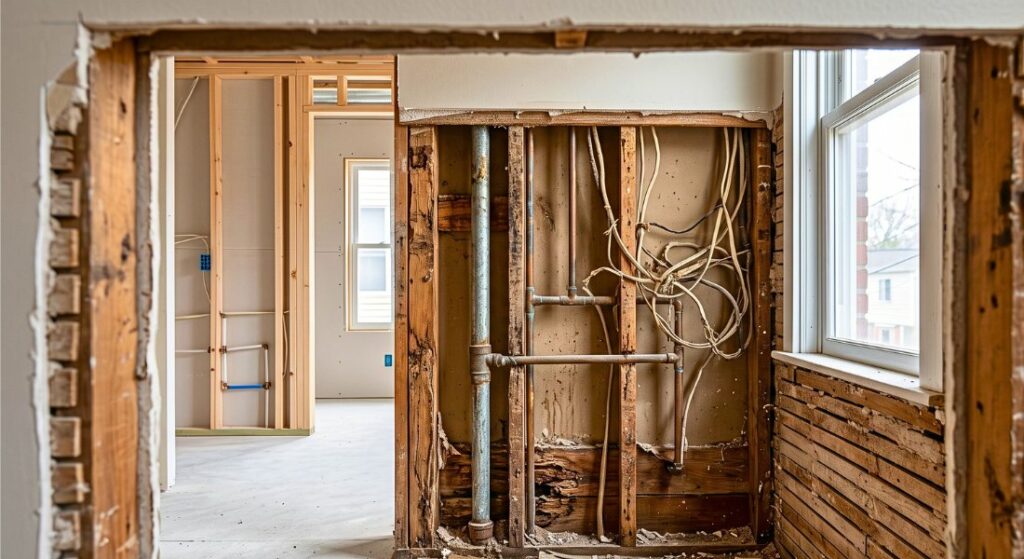
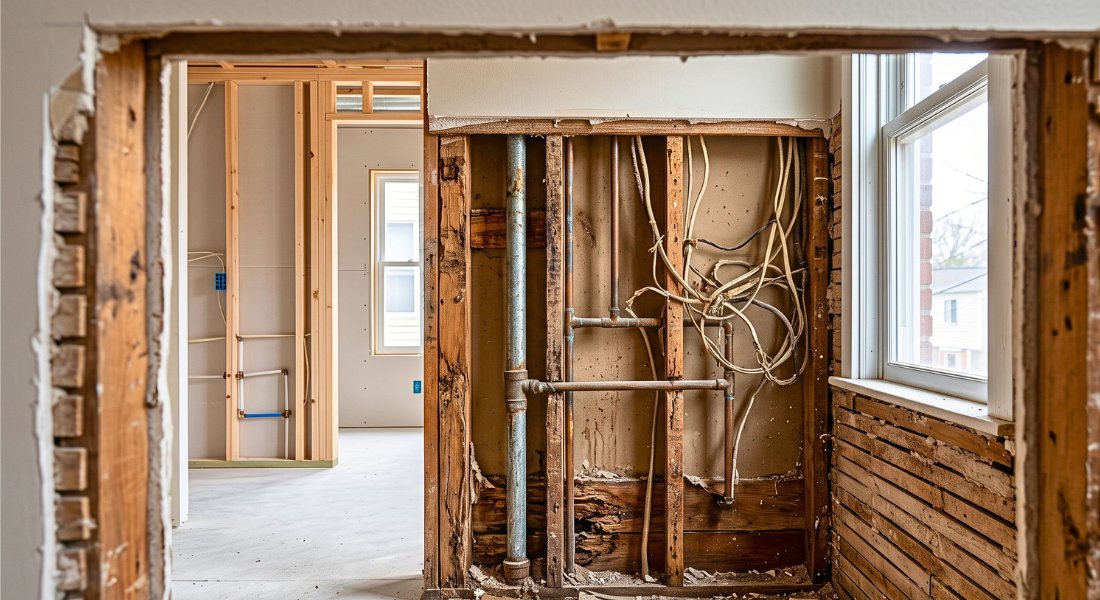
New construction can provide a clearer cost framework before work begins, covering foundation, framing, and mechanicals. Surprises still happen, but the scope is generally easier to define upfront. A gut renovation can hide major conditions behind the drywall until demolition begins. What starts as a renovation can eventually move toward a full new-construction budget.
The problem is what happens after that pivot. By then, you've already spent on demolition, permits, and early trades. You are now reconsidering a project that was never priced as a teardown.
Mario Greco sees cost certainty as a central issue in this decision.
"The key word is certainty. There is almost no cost certainty with a gut renovation because you don't know what you're going to find behind the drywall. You don't know what's under the floors. What may appear to be a less expensive construction project when you buy a renovation candidate, you might end up spending money down the renovation lane and then having to pivot to the new construction lane. And then you've basically put good money after bad, because you're going to have to redo a lot of what you did."
— Mario Greco, Founder, The MG Group at Compass
Tax Timing Can Work in Buyers' Favor
Chicago buyers often assume new construction carries a permanent tax penalty. The reality is more layered, and some scenarios can work out more favorably. The key is understanding how new construction enters the county's assessment process.
Cook County follows a triennial reassessment cycle, but new construction can trigger reassessment outside the regular cycle. A newly completed home may initially remain assessed based on the property's prior condition. The timing of the updated assessment can create a temporary cash-flow advantage. However, the higher tax liability can also be applied retroactively.
The contrast is easiest to see on vacant land before anything is built. A teardown lot purchased for $1 million might carry a relatively modest tax bill. The finished $4 million home would be assessed at a much higher value. That difference can create a significant temporary cash-flow advantage while the assessment catches up.
Gut renovations work differently because the existing structure already has an assessment history. Improvements can still affect the property's assessed value, especially when they materially change the property. The timing and size of that change depend on the property's circumstances.
New construction can create a temporary cash-flow advantage if the higher assessment takes time to appear. A gut renovation may avoid that particular timing issue, but its assessment can still rise. The right answer depends on your timeline and how you model the carrying costs.
Both paths reward contesting an assessment when the appeal window opens. Buyers should also understand how Cook County assessments can change over time and what owners can do about it.
Asbestos Can Derail a Renovation Budget
Gut renovation projects can get derailed by costs that never appear in an initial pro forma. Those costs may remain hidden until renovation exposes suspect materials. In Chicago's older housing stock, one potential cost is asbestos.
Chicago's older housing stock includes many buildings that may contain asbestos-containing materials. Bungalows, two-flats, and older multifamily buildings can contain suspect materials in flooring, siding, insulation, and other components. Illinois EPA recommends inspecting for asbestos before renovation or demolition work that could disturb those materials.
Common suspect materials can include older floor tiles, siding, pipe insulation, duct insulation, and other building components. You cannot reliably identify asbestos by appearance alone. Suspect materials should be sampled by a properly trained professional before renovation disturbs them.
Mario Greco sees asbestos as a major cost risk in older renovation projects.
"In a gut renovation situation, everything looks great, there's carpet, there's even what looks like vinyl flooring. All of a sudden, you're digging in, and there's a layer of asbestos beneath the vinyl. Back in the '40s, '50s, '60s, and '70s, guess what was used for siding? Asbestos. So instead of taking the asbestos down, they put new siding up. The risk of finding asbestos and the cost of abating it can be prohibitive."
— Mario Greco, Founder, The MG Group at Compass
Abatement can add more than a simple line item to a renovation budget. Depending on the material and scope, it may require qualified professionals, containment, removal, and additional project time. Illinois EPA recommends having a qualified inspector evaluate a building before renovation or demolition.
Buying a vintage Chicago property? Talk it through with the MG Group team before you finalize your renovation budget.
Permits, Financing, and Contractors Add Up
Several more variables belong in any serious analysis of gut renovation versus new construction. They often get overlooked in early budgeting and can swing the outcome. They include permitting, carrying costs, and contractor access.
Permitting speed matters more than most buyers realize, and it can determine whether a project starts this quarter or next. Chicago permit requirements depend on the scope of work, and major renovations can require more extensive review.
New construction can require a more extensive permit review, depending on the project and review pathway. Qualifying professionals can use Chicago's Self-Certification Program to streamline eligible permit applications. Demolition permits can also allow approved teardown work to move forward separately from the broader construction permit. That sequencing can help reduce idle time before construction begins.
Carrying costs can favor construction loans, depending on the loan structure. Some lenders establish an interest reserve that covers construction-period interest from the loan proceeds. That can reduce the borrower's monthly cash outlay during construction, although the interest still represents a project cost. The impact becomes more significant as construction takes longer or borrowing costs rise.
Contractor access is not a free market in Chicago, and that catches many first-time buyers off guard. Individual buyers can benefit from selecting a general contractor before closing, particularly on projects involving substantial renovation or new construction. The general contractor can then coordinate the trades, inspections, scheduling, and sequencing. Hiring subcontractors separately puts more coordination responsibility on the owner.
Gut Renovation vs New Construction FAQs
Is gut renovation always cheaper than new construction in Chicago?
Not necessarily. A distressed property may have a lower acquisition price, but hidden renovation costs can narrow or eliminate that advantage. Asbestos, deteriorated mechanicals, and structural conditions can push total costs higher. Cost certainty matters more than the purchase price alone.
How does Cook County's triennial assessment cycle affect new construction buyers?
Cook County reassesses properties on a three-year cycle by township. Chicago properties can also be reassessed outside the regular cycle when significant changes involve permits or other special circumstances. New construction can therefore create a temporary gap between completion and the property's updated assessment, but the timing varies by property.
Do gut renovations trigger a Cook County property tax reassessment?
They can. Significant improvements or changes related to permits can cause a Chicago property to be reassessed outside the regular cycle. The resulting assessment depends on the property's circumstances and updated value. A gut renovation does not automatically receive a lower tax rate than new construction.
Where is asbestos most commonly found in older Chicago properties?
Potential asbestos-containing materials include older floor tiles, siding, pipe insulation, duct lining, and other building components. Illinois EPA identifies these materials among common places asbestos may be found in older homes. You cannot reliably identify asbestos by appearance, so suspect materials should be professionally sampled before renovation disturbs them.
What does asbestos abatement actually cost in a Chicago renovation project?
Costs vary widely based on the material, quantity, location, and scope of work. Larger projects may require licensed asbestos contractors, containment, removal, disposal, and additional project time. A pre-purchase asbestos assessment can help identify potential costs before you finalize a renovation budget.
How should a buyer find a general contractor for a Chicago gut renovation?
Start interviewing general contractors before closing, especially if the property needs substantial renovation. The general contractor can coordinate electrical, plumbing, HVAC, framing, inspections, scheduling, and other trades. Hiring subcontractors separately puts more coordination responsibility on the owner.
Can a construction loan be used for a gut renovation in Chicago, or only for new construction?
Construction loans can finance both gut renovations and new construction. Some lenders establish an interest reserve that covers construction-period interest from loan proceeds. That can reduce monthly cash outlays during the build, but the interest remains a project cost.
What contingency reserve should a buyer budget for a gut renovation on a vintage Chicago property?
A 15% to 20% contingency can provide a reasonable planning range for a major gut renovation. However, the appropriate reserve depends on the property's condition and scope. Older properties with uncertain conditions may justify a larger reserve. Pre-purchase inspections and asbestos assessments can reduce, but not eliminate, contingency exposure.
Run the Numbers Before You Commit
Neither gut renovation nor new construction is automatically the better choice. The right answer depends on the property's condition, your timeline, and the costs you can realistically carry.
Want to know which path actually pencils out on your property? Connect with the MG Group for a property-specific analysis before you commit to a gut renovation or new construction.
ABOUT THE AUTHOR
Mario Greco | Founder, The MG Group at Compass | 24+ years, 5,080+ transactions, $2B+ in career sales | #1 Large Team in Chicago (RealTrends 2024) | #2 Team in Chicago (RealTrends 2025) | Top 1% since 2002 | JD, Boston University | BS Engineering, Northwestern