Flood Insurance vs. Water Intrusion: The Coverage Mistake Chicago Buyers Make
Buyers worry about water for good reasons, especially in a city built on basements. In Chicago, concern about water damage often pushes buyers to act quickly and buy protection that feels comprehensive. Too often, that protection misses the most likely risk.
Many owners end up overinsured for floods they may never experience and underinsured for the water damage they are more likely to face. The fix starts with a distinction that is rarely explained clearly.
Why Water Risk Feels Bigger in Chicago
Chicago’s housing stock includes countless finished basements, garden units, and duplexes-down. Heavy rain, aging infrastructure, and dense development create meaningful exposure.
Buyers hear stories about flooded basements and six-figure repairs. Fear kicks in, and insurance decisions follow emotion rather than the real risks. When that happens, coverage mismatches become almost inevitable.
Flood Insurance and Water Damage Are Different
In insurance language, a flood has a narrow definition. It typically means water from outside the property, due to rising bodies of water or surface runoff, that meets specific criteria.
That definition excludes many of the events Chicago owners actually face. In Chicago, you’re more likely to experience seepage through foundation walls, sewer or drain backups, and water intrusion at window wells.
That means buying flood insurance does not protect you from the most common basement disasters.
Why Flood Insurance Gets Oversold
Flood insurance is easy to explain and easy to recommend. If you are in a floodplain, it is required. Outside of floodplains, it is optional. That clarity makes it appealing in an industry full of fine print.
The problem is psychological. Buyers hear “water risk” and assume one solution covers everything. Flood insurance sounds definitive, but it only applies to a specific scenario.
The Coverage Most Chicago Buyers Need
For many properties, especially those with below-grade living space, a water intrusion or sewer backup endorsement is more important.
This type of coverage includes things like:
- Water entering the home due to drainage failures
- Backups caused by overwhelmed municipal systems
- Non-flood water events that still cause major damage
This coverage lacks the name recognition of flood insurance, but it aligns better with Chicago’s infrastructure reality.
Garden units, Duplexes-Down, and Basements
Not all below-grade spaces carry the same risk. Garden units that sit partially above grade behave differently from deep basements. A duplex-down with living space below grade creates lifestyle risk as well as financial exposure.
Instead of just focusing on whether flooding has occurred in the past, buyers should also consider where water would flow if something failed. That approach moves the conversation away from fear and toward understanding risk.
Inspectors Identify Real Water Risk
Imagine a buyer under contract for a classic Chicago two-flat with a finished basement. The seller insists the basement has never flooded. The buyer remains uneasy because the space feels cool and recently painted.
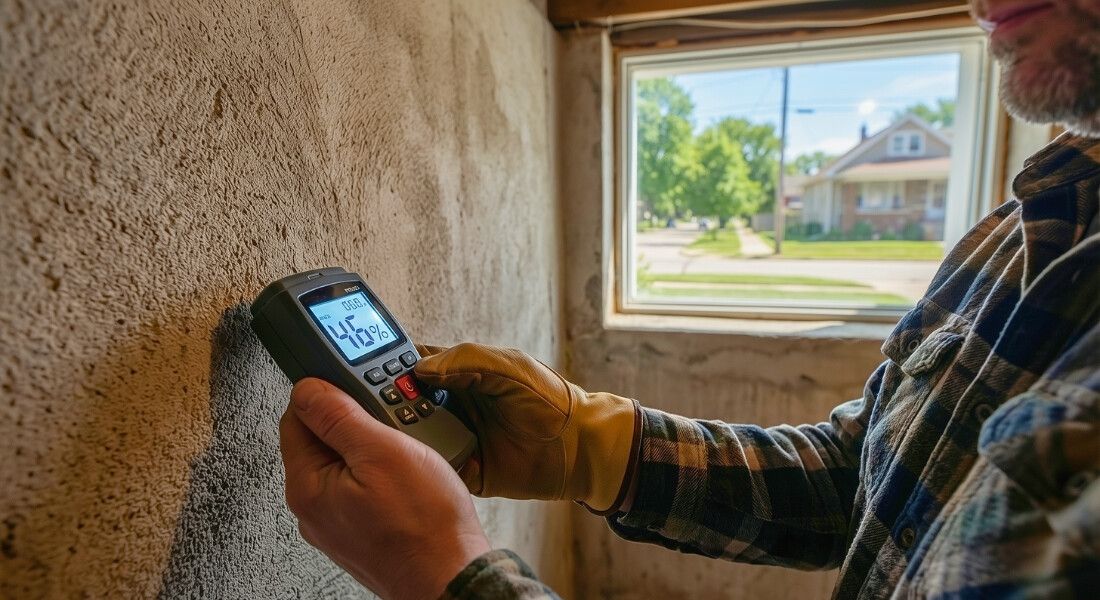
During inspection, the inspector uses a moisture meter along the foundation walls and around the window wells. The readings show elevated moisture in two corners.
The inspector traces the issue to poorly graded soil and aging window well covers. No standing water appeared, and no catastrophic failure occurred, but an intrusion likely occurred during heavy storms.
The seller provides documentation showing that new window well covers and regrading were completed six months earlier. The buyer adjusts expectations, negotiates a modest credit, and updates insurance coverage.
How Inspections Reduce Anxiety
Thorough inspections do more than list defects. They look for indicators of past or potential water movement. Moisture meters, visual grading analysis, and drain assessments help identify risk patterns even when surfaces look clean.
This approach gives buyers leverage and clarity. A thorough inspection supports smarter insurance decisions and calmer negotiations.
Disclosure Helps Sellers Protect Value
From a resale and liability standpoint, water issues do not automatically kill deals. Non-disclosure does. When sellers experience water intrusion and reasonably believe the issue has been resolved, disclosure builds credibility.
Explaining the problem, the fix, and the documentation gives buyers a framework for trust. That transparency preserves value better than hoping an issue never comes up again.
Why Minimization Makes Buyers Nervous
When sellers minimize past water issues without explaining the solution, buyers assume the worst. They worry the cause still exists or that details remain hidden.
A clear repair story changes that perception. Drain tile installation, foundation sealing, or window replacement provides context and reassurance.
The Decision Framework For Buyers
Instead of asking whether they need flood insurance, buyers should ask better questions:
- Are they in a designated floodplain?
- Where is the lowest living space relative to grade?
- What are the most likely failure points during heavy rain?
- Does the policy specifically cover those scenarios, and what is excluded?
These answers drive smarter coverage decisions than any blanket rule.
Your Questions Answered
Is flood insurance required for most Chicago homes?
Flood insurance is required only when a property is in a designated floodplain, and the buyer uses a federally backed loan. Many Chicago homes fall outside these zones.
Does homeowners’ insurance cover basement water damage?
Standard policies often exclude sewer backups and certain types of water intrusion. Coverage usually requires specific endorsements.
Are finished basements riskier to insure?
Finished basements increase potential loss because finishes and contents raise replacement costs. Insurers care less about finishes and more about exposure.
Can past water intrusion affect resale value?
Yes, but disclosure and documented repairs often soften the impact. Buyers focus on risk management, not perfection.
How much does sewer backup coverage usually cost?
Costs vary by carrier and coverage limit, but it is often relatively affordable compared to flood insurance. That means targeted protection can be cost-effective for you.
Do inspectors determine whether insurance will cover water damage?
Inspectors identify conditions and risk indicators, not coverage outcomes. Insurance agents translate that information into policies.
Make Smarter Coverage Decisions
Flood insurance solves a specific problem. Water intrusion coverage solves a different one. Chicago buyers do not need to be less concerned about water. They need better alignment between risk and protection.
Do you want help understanding the risks and how they might affect different properties? The MG Group can help you get the information you need to make informed decisions.
Reach out to MG Group now for expert guidance in Chicago’s real estate market.