What Chicago’s LaSalle Loop Office Conversions Actually Mean for Downtown Condo Buyers
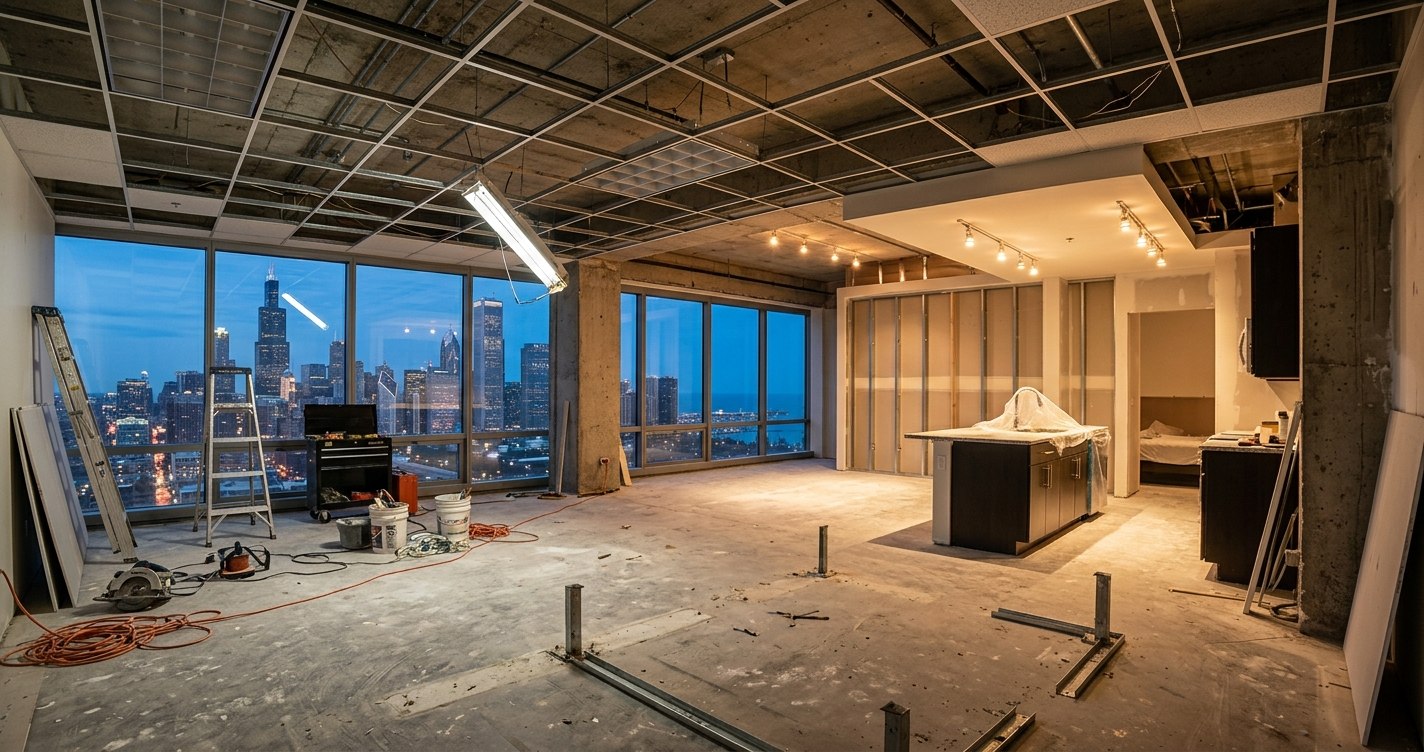
Chicago’s LaSalle Loop office-to-apartment conversions are generating roughly 90% of their product as rental units, not for-sale condominiums. For downtown condo buyers asking whether to wait out the wave, that single distinction changes the entire calculus.
More renters in the Loop means more restaurants, more retail, more street life at 9 p.m. on a Tuesday. It does not mean a flood of new for-sale inventory competing against your purchase.
Loop conversions create neighborhood activation, not a supply shock for condo buyers. For-sale inventory downtown remains constrained. Structural inputs point toward appreciation, not softening.
Mario Greco | Founder, The MG Group at Compass | 24+ years, 5,080+ transactions, $2B+ in career sales | #1 Large Team in Chicago (RealTrends 2024) | Top 1% since 2002 | JD, Boston University | BS Chemical Engineering, Northwestern
The Distinction That Changes Everything for Downtown Condo Buyers
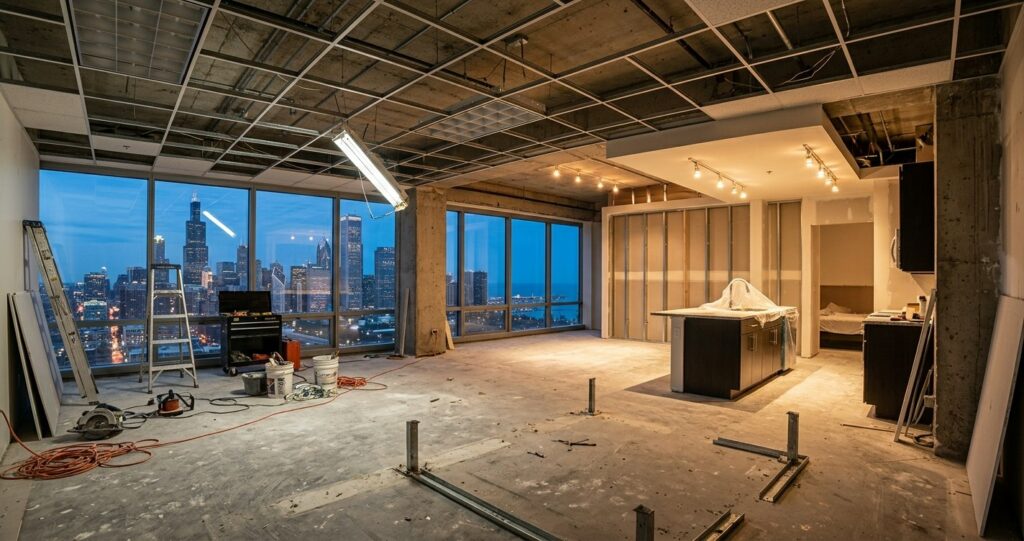
The LaSalle Loop conversion program is real. It started about 2 to 3 years ago, after COVID. The program stalled due to the city’s regulatory hurdles and has only recently begun producing tangible results.
Broad coverage consistently misses one critical fact. The overwhelming majority of this new supply is rental apartments, not for-sale condominiums.
This distinction reframes the entire conversation. New rental inventory downtown does not compete with the condo market. It does not compress condo values, nor does it add to the for-sale supply that buyers and sellers negotiate against.
Instead, it brings thousands of new residents into the Loop. They dine at local restaurants, shop nearby, enjoy the theater district, and stroll through Millennium Park on a Tuesday evening.
That’s not a threat to downtown property values. It’s the ingredient downtown has been missing since March 2020.
What Activated Neighborhoods Look Like
To understand the Loop’s conversion future, look at how a single major employer previously transformed a Chicago neighborhood.
When Google opened its Chicago office in the West Loop roughly a decade ago, the neighborhood transformed. What was once a few loft restaurants and underutilized blocks became Chicago’s most expensive neighborhood per square foot.
That transformation was no coincidence. Concentrated foot traffic at 7 a.m., noon, and 10 p.m. reshaped the economics for retail and restaurants in a six-block radius. The West Loop became a place worth paying a premium to live in precisely because it felt alive.
Downtown Chicago still largely empties after 6 p.m. However, the LaSalle Loop conversions and Google’s arrival at the Thompson Center provide the structural inputs to change that dynamic permanently.
Downtown Condo Pricing Trends
Existing condo inventory across Chicago runs approximately 26% below year-over-year levels. New condo inventory is down 18% year over year. These conditions are not consistent with a buyer’s market materializing anytime soon.
Nothing in the LaSalle Loop conversion pipeline changes that calculus. The new product coming online is a rental, not a for-sale unit.
Downtown specifically has seen no meaningful increase in for-sale inventory. Sellers in these buildings are holding tighter, anticipating that Google’s announcement and increased street activation will push values higher.
Whether that expectation is fully warranted for a 20-year-old unit that needs a new furnace is a separate question. Still, the directional effect on available inventory is real. Buyers waiting for relief from the conversion wave will not find it.
Understanding how Cook County property taxes interact with newly converted residential buildings adds another layer of complexity. Many converted structures will face reassessment risk in years two and three after conversion. This dynamic affects carrying costs for both renters and any eventual for-sale buyers in those buildings.
If you’re watching Chicago’s broader inventory picture, the current for-sale drought is part of a longer pattern worth understanding. The 2025 Chicago housing market analysis shows how inventory compression has evolved across neighborhoods in the past 18 months.
Not sure how the current downtown inventory affects your search? Talk to Mario Greco’s team about which buildings are leading or lagging the activation curve before deciding to wait.
Insights from Mario Greco on Loop Conversions
Mario Greco has tracked every phase of Downtown Chicago real estate for more than two decades. His insights on conversion activity cut through the headline noise.
It is mostly apartments, so it’s mostly rentals, probably 90% of this is going to be rentals. So it’s not really going to affect people’s desire to buy in the Loop or downtown. But it will add so many people downtown, which I think will increase the number of entertainment and retail options. I don’t think it’s going to affect for-sale pricing or momentum.” – Mario Greco, Founder, The MG Group at Compass.
This distinction matters. Rental and for-sale supply operate as separate markets with distinct financing. A studio rental at 208 S. LaSalle does not compete with a two-bedroom for-sale condo at 130 N. Garland.
How New Residents Enhance Downtown Chicago
A more useful way to evaluate a downtown condo purchase is through the lens of the resident multiplier. Each new full-time resident downtown supports additional retail and service activity.
Chicago’s Loop has long functioned as a 9-to-5 district. It fills with people on weekday mornings, but mostly empties by 7 p.m. Converting office square footage into housing permanently changes that pattern.
The LaSalle Central initiative has support from aldermen across wards, the mayor’s office, and downtown institutions occupying nearby office space. The logic is simple. More people on the street at all hours improve the experience of working, dining, and living downtown for everyone.
How to Interpret Loop Conversion News for Buyers
Coverage of this story follows a predictable template: headline writers see “apartments” and write “supply shock.” Supply shocks require a competing product in the same market segment. For-sale condos and rental apartments carry different ownership, financing, and resale structures. They’re not interchangeable from a buyer’s perspective.
Buyers need to track a few key factors. These factors include:
- For-sale units
- Neighborhood days-on-market
- Whether activation is accelerating or stalling
- New retail openings
- Restaurant announcements
- Google’s Thompson Center construction timeline
- Foot traffic changes along the LaSalle corridor.
Those signals tell you far more about the direction of condo pricing momentum than any conversion headline.
The buyers who purchased in the West Loop before it was fully activated didn’t wait for certainty. They read the structural inputs correctly and moved while the premium was still reasonable.
For buyers weighing new construction versus resale downtown, the risk comparison between the two is worth reviewing. It helps determine where the better value lies today.
Downtown Condo Loop Conversions FAQs
Will Chicago’s Loop office-to-apartment conversions lower condo prices?
No. Most converted units are rental apartments, not for-sale condos. Rental and for-sale markets operate separately, with different financing and resale dynamics. Adding rental inventory downtown does not create competing products for condo buyers or directly lower condo prices.
How much of the LaSalle Loop conversion supply is rental vs. for-sale?
We expect about 90% of the converted units to be rentals. The remaining for-sale product is a small fraction. It will not materially increase traditional condo inventory in the downtown market.
Is Downtown Chicago’s condo inventory increasing right now?
No. Existing condo inventory across Chicago is roughly 26% below last year, while new condo inventory is down about 18%. Even with conversions, the for-sale market remains tight. Current conditions continue to favor sellers.
What does the Google Thompson Center announcement mean for downtown condo values?
Google’s planned presence will increase daytime and evening foot traffic. More people on the street improve the economic viability of nearby retail and restaurants. That, in turn, supports property values in adjacent buildings over the long term.
Should I wait for the conversion wave to finish before buying downtown?
Waiting will not result in lower condo prices. The units coming online are rentals, not for-sale condos. Downtown inventory remains compressed. Structural factors such as new residents, Google’s presence, and street activation point to long-term appreciation.
Which neighborhoods will benefit most from the Loop activation story?
Buildings within walking distance of LaSalle Street, the Thompson Center, and Millennium Park stand to benefit most. The West Loop, after Google’s first Chicago office opened, is the closest comparable example. Proximity to activated street life and major employer anchors consistently supports a price premium.
How does the new rental supply affect Chicago’s downtown rental market?
Rental inventory may slightly flatten or reduce downtown rents in the near term as new units absorb demand. That dynamic does not carry over to the for-sale condo market. Condos operate on a separate inventory base and follow a completely different financing structure.
What should downtown condo buyers track right now instead of conversion headlines?
Track for-sale unit volume in your target building and neighborhood. Watch days-on-market trends and activation signals, such as new retail, Google’s Thompson Center timeline, and LaSalle foot traffic. These factors provide a more accurate read on condo pricing momentum than conversion announcements alone.
Downtown Chicago Opportunities for Savvy Buyers
Buyers waiting for conversion supply to soften condo prices are waiting for something that isn’t coming. The new units target a different market and are more likely to support long-term property values than compete with them.
Ready to analyze a specific building or neighborhood? Schedule a 20-minute game plan call with MG Group. We’ll review comps, project your payment across three rates, and show if the building is ahead or behind the activation curve.