Google’s Thompson Center Move Won’t Transform Downtown Chicago the Way You Think
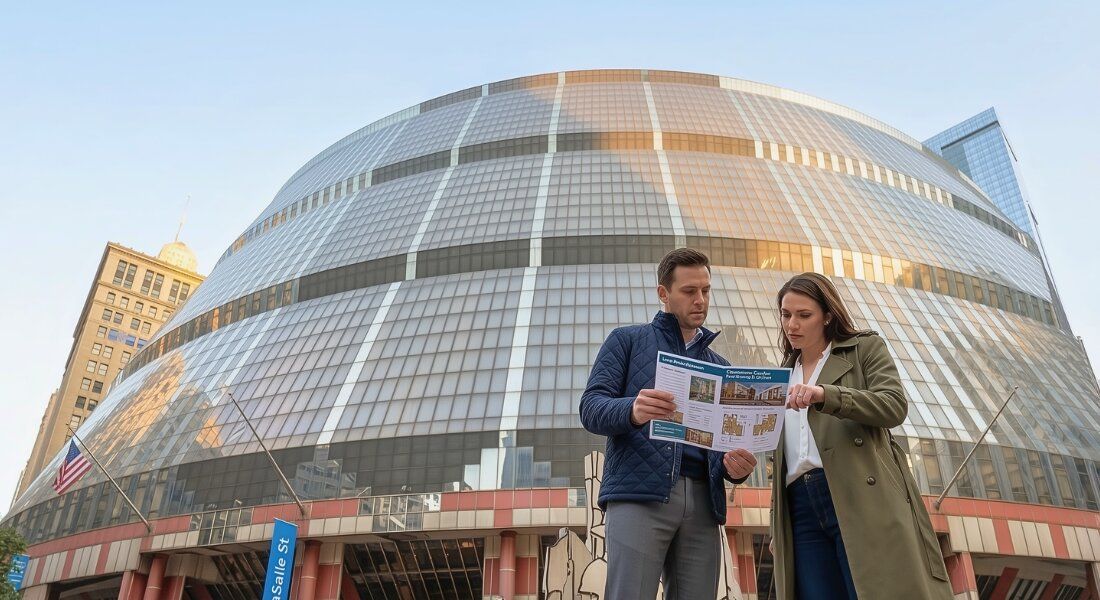
Google is coming to the Thompson Center, and Downtown Chicago real estate is generating significant buzz. Before you act on that buzz, take a closer look at what the data and a 24-year track record actually show.
The impact will be real. The timeline will be slow. And the mechanism will likely surprise many buyers and investors watching the Loop right now.
Mario Greco | Founder, The MG Group at Compass | 24+ years, 5,080+ transactions, $2B+ in career sales | #1 Large Team in Chicago (RealTrends 2024) | Top 1% since 2002 | JD, Boston University | BS Chemical Engineering, Northwestern
Why Everyone Is Reaching for the West Loop Comparison
The West Loop comparison is the first place most people go, and the logic makes sense. Anyone who watched Google’s West Loop office reshape that neighborhood over the past decade knows the brand’s impact. It doesn’t just lease space; it transforms zip codes.
What was once a cluster of restaurants in converted lofts, surrounded by industrial land, quickly transitioned. It became one of Chicago’s most expensive neighborhoods on a price-per-square-foot basis. Restaurants, retail, entertainment, and residential development followed.
Naturally, when “Google” and “Downtown Chicago” appear in the same headline, the market expects a sequel. However, that instinct overlooks several structural differences. Serious buyers and investors must examine these nuances before betting on the Thompson Center narrative.
How Downtown Chicago’s Strong Foundation Shapes Opportunity
Downtown Chicago is not the West Loop in 2013. The West Loop transformation worked partly because of its low starting baseline and significant room for growth. Downtown already has the theater district, Millennium Park to the east, and an established commercial infrastructure. Google is not arriving in a vacuum.
Mario Greco has watched neighborhood transformation cycles unfold from the inside for nearly a quarter-century. He draws his perspective on Google’s move to the Thompson Center from that experience, not from the headlines.
“Google’s kind of a magic word in Chicago because Google opened their Chicago office in the West Loop, and it exploded the West Loop: restaurants, entertainment, retail. It just completely changed people’s idea of what the West Loop was. I expect that the magic word Google will help downtown, but I don’t know if it will do the same for downtown as it did in the West Loop. It’s a block from the theater district, so there was already some attraction in terms of nightlife.” – Mario Greco, Founder, The MG Group at Compass.
That proximity to existing amenities cuts both ways. Downtown doesn’t need Google to legitimize it the way the West Loop once did. The incremental lift will be real, but more measured than the headlines suggest.
According to Chicago’s Department of Planning and Development, the Loop has seen multiple city-backed revitalization initiatives since 2020. Its starting conditions are far stronger than the West Loop’s a decade ago.
How Office-to-Residential Conversion in the Loop Gets a Catalyst
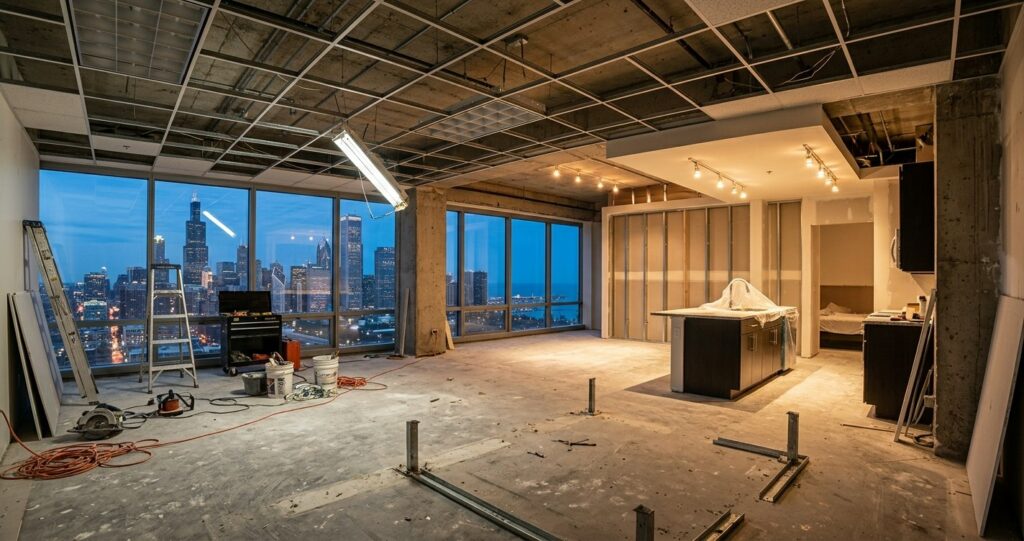
The more consequential downstream effect of Google’s Thompson Center presence may not be a sudden price spike. Instead, it could accelerate something already in motion: the conversion of empty Loop office towers into residential units.
That process started two to three years ago, after the pandemic. Regulatory drag slowed it considerably, as tends to happen in Chicago. But conversions are now gaining traction, and roughly 90% of those units will be rentals, not for-sale condos. That distinction matters for buyers watching the Downtown Chicago market.
This wave of new rental supply won’t directly compete with the for-sale condo market. What it will do is bring thousands of new residents downtown. With residents come the restaurants, retail, and round-the-clock neighborhood activity that currently disappears after 6 p.m.
Mario Greco tracks not just sales data but the behavioral signals that precede market shifts. What he observes in downtown inventory right now tells a story the Google headlines miss entirely.
“I think there will be enough potential job creation because of the Google office that it’s going to cause more people to want to live downtown. It is mostly apartments, so it’s mostly rentals; probably 90% of this is going to be rentals. So it’s not really going to affect people’s desire to buy in the Loop or downtown. Still, it will add so many people downtown that I think it will increase the number of entertainment and retail options. In downtown’s case, people are there 8am to 6pm for work and then the place becomes desolate. That’s not going to be the case once this starts.” – Mario Greco, Founder, The MG Group at Compass.
This shift is about perception as much as it is about economics. When a neighborhood stops emptying at 6 p.m., its value proposition changes. That doesn’t show up immediately on a spreadsheet, but in how buyers, renters, and businesses evaluate the area.
Stay ahead of Chicago’s shifting market. Our 2025 Chicago housing market analysis breaks down the city-wide trends driving what’s happening in the Loop today.
How Buyers and Investors Can Leverage This Insight
The right response to the Thompson Center news depends entirely on who you are and your timeline.
Renters Considering Downtown
Renters should expect more supply coming. Rents may flatten and soften modestly over the next 18 to 24 months. If downtown pricing has kept you on the sidelines, that window may open sooner than you expect.
Condo Buyers Near the Loop
Don’t expect an immediate price surge driven by Google hype. Sellers already holding downtown units are banking on exactly that narrative. Inventory has ticked down as sellers wait for a “Google bump.” Buyers face a tighter selection right now, not a wave of motivated listings. The dynamics are similar to Chicago’s Q4 buying window. Opportunities arise precisely when other buyers are sitting on the sidelines.
Long-Term Investors
For investors, the story is about changing perceptions, and that takes time. The West Loop didn’t reprice overnight. It took years of sustained Google presence before the neighborhood fully transformed. Downtown’s shift will likely be slower given its higher baseline costs, existing commercial infrastructure, and Chicago’s well-documented regulatory pace.
Not sure how to approach a downtown purchase or investment in this market? Talk to the MG Group team to see what the current inventory data really reveals before you act.
The Play for Anyone Watching Downtown Chicago Right Now
Google coming to the Thompson Center is genuinely good news. The job creation is real. The catalyst for accelerating office-to-residential conversion is real. The long-term shift in how people experience and value downtown living is real.
The idea that this move will match the West Loop’s transformation in terms of timeline or scale isn’t realistic yet. Downtown starts from a different baseline and faces a different competitive landscape. It also operates within the same Chicago regulatory environment that has already slowed office-to-residential conversions for several years.
The most effective approach is informed optimism. Understand what Google’s Thompson Center move changes and what it does not. Then make decisions based on current market data, not headlines.
Downtown Chicago Answers that Buyers Need
Will Google’s Thompson Center move raise Downtown Chicago condo prices?
Not immediately, and not dramatically. Downtown Chicago already carries significant existing infrastructure, which limits the upside compared to the West Loop transformation. Long-term appreciation is likely, but buyers should expect a slower timeline rather than a rapid price surge.
How is the Thompson Center situation different from Google’s impact on the West Loop?
The West Loop was genuinely underdeveloped when Google arrived, giving the neighborhood a massive upside from a low baseline. Downtown Chicago starts from a higher baseline with established amenities, the theater district, and Millennium Park already in place. Google’s impact downtown will be incremental rather than transformational.
What is office-to-residential conversion, and how does it affect Downtown Chicago?
Office-to-residential conversion is the process of repurposing vacant office towers into housing units. In Chicago, about 90% of these conversions produce rental apartments rather than for-sale condos. Conversions add residents and foot traffic to downtown while leaving the for-sale condo market largely unaffected.
Should I consider buying a Downtown Chicago condo now?
The answer depends on your timeline and goals. Inventory is tighter right now because some sellers are holding out for a Google-driven price bump. Buyers who move before that narrative fully prices in may find more negotiating flexibility than many expect.
Will Downtown Chicago rental prices drop because of the new residential conversions?
Rents may soften over the next 18 to 24 months as new office-to-residential conversions increase rental supply. A significant drop is unlikely given ongoing demand. Landlords who previously priced out some renters may offer more accessible options during that window.
How long did the West Loop transformation actually take after Google arrived?
The West Loop’s transformation didn’t happen overnight. Google opened its Chicago office roughly a decade ago. The neighborhood repriced over multiple years of sustained presence, business investment, and residential demand. If downtown follows a similar pattern, the shift will likely take even longer due to its higher starting baseline.
Is Downtown Chicago a good long-term real estate investment right now?
Long-term fundamentals are improving. Job growth in tech, accelerating office-to-residential conversions, and the city’s residential pipeline all point to an upward trend. The main risk for investors is overestimating short-term gains and overpaying based on hype instead of actual market data.
Which neighborhoods near Downtown Chicago benefit most from the Thompson Center move?
The immediate Loop and Near North neighborhoods stand to benefit most from increased foot traffic and residential demand. Buyers and investors watching River North, Streeterville, and the South Loop corridor should track rental conversion activity. They should also monitor new resident absorption rates as leading indicators over the next two to three years.
Take Action With Expert Insight
Thinking about a downtown purchase, sale, or investment? The right move depends on understanding current inventory trends, neighborhood dynamics, and market perception.
Schedule a 20-minute strategy conversation with Mario Greco and The MG Group. Get clarity on what the data actually shows and make informed decisions before the headlines set the narrative.