What Chicago Buyers Miss About New Construction Property Taxes
New construction buyers in Chicago often feel a brief moment of financial relief right after closing. The first tax bill comes in low and seems manageable. It’s almost comforting.
That feeling is misleading.
What you are seeing is not a benefit of buying new. There is a timing gap in Cook County’s property tax assessment process. If you do not plan for it, that gap can quietly derail your budget within the first 18 months of ownership.
Why New Construction Taxes Look Artificially Low at First
Cook County does not assess properties in real-time. There is a delay between when a home is completed, sold, and fully recognized by the assessor’s office at its true market value.
During that gap, several things typically happen.
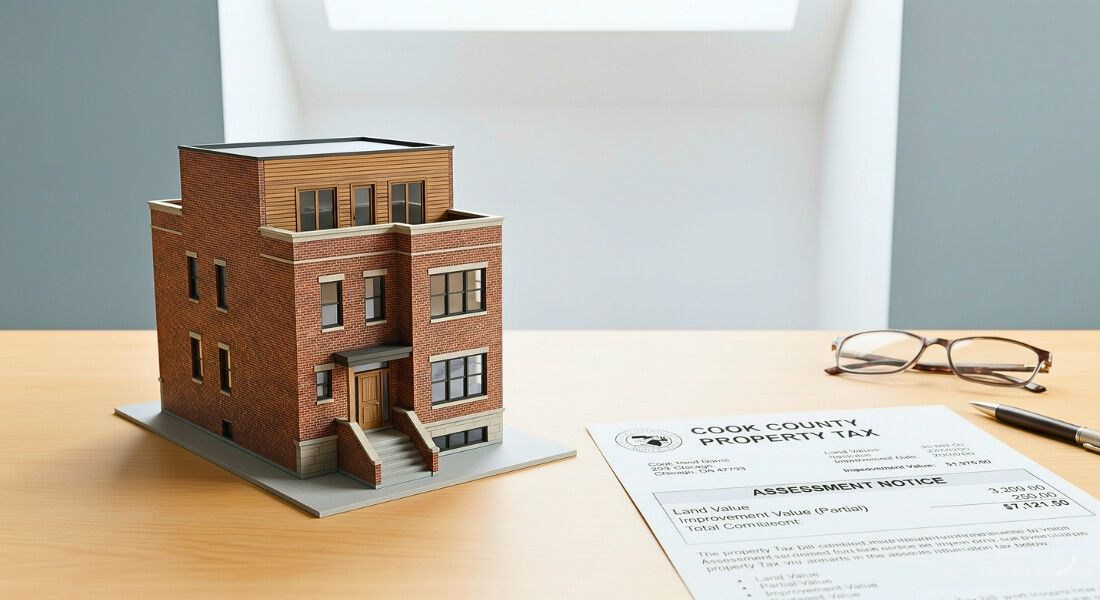
The property may still be assessed closer to land value than finished home value. Improvements may be partially captured or not captured at all. That means the tax bill may reflect an incomplete picture of the asset you actually own.
Lenders base escrow payments on that early bill. Buyers then anchor their monthly payment expectations to a number that was never meant to stand the test of time.
The Correct Mental Model Buyers Should Use
The most dangerous mistake new construction buyers make is assuming the first tax bill is a baseline. Instead, view it as a period when you’re temporarily underpaying.
You didn’t get a break, and nothing went wrong. The system simply has not caught up yet.
If you build your lifestyle around that early number, the later adjustment feels painful, even though it was always coming.
The 18-Month Reality Check Most Buyers Are Not Warned About
For many new-construction purchases in Chicago, the full reassessment arrives roughly 1 to 1.5 years after closing. That is when the finished home value replaces the placeholder assessment.
The timeline often looks like this:
- Months one through eighteen feel stable and affordable. Taxes appear low. Escrow seems reasonable.
- Then the reassessment hits. Taxes jump. Escrow recalculates. Monthly payments increase.
These taxes didn’t come from out of nowhere. It’s just your real tax bill finally arriving.
Why This Matters as Much as Interest Rates
Buyers obsess over rate locks, basis points, and market timing. Those things matter. But new-construction taxes can push monthly payments just as much, especially at higher price points.
When taxes reset, escrow adjusts upward. That change is permanent unless successfully appealed. The monthly payment you planned around no longer exists.
The damage is not the increase itself. It’s the surprise.
When you aren’t expecting the increase, it forces rushed financial decisions. That creates stress that buyers could have avoided with proper planning.
The Right Way to Budget for New Construction Ownership
The fix is not complicated, but it requires discipline.
When you model ownership costs for new construction in Chicago, ignore the initial tax bill entirely.
Instead, estimate the stabilized tax once the property has a full assessment at market value. Use realistic assumptions, not best-case scenarios.
Then build your monthly budget as if that higher number already exists. If the future payment feels tight on paper, it will feel tighter in real life.
Turning the Tax Lag Into a Planning Advantage
Handled correctly, the tax lag need not be a problem. It can actually be an opportunity.
During the low-tax period, you are paying less than you will eventually. You could treat that difference as a time for saving rather than extra spending room.
Here is how disciplined buyers use the lag to their advantage:
- They set aside the difference between current taxes and projected stabilized taxes every month.
- They build a cushion before the reassessment arrives.
- They prepare emotionally and financially for the shift rather than react to it.
When the tax bill resets, nothing about their lifestyle changes. Only the line items do.
When the Real Tax Bill Arrives
Imagine a buyer who closes on a new construction condo in Chicago. The first tax bill reflects mostly land value, and the monthly payment feels comfortable. As a result, the buyer upgrades furniture, commits to higher discretionary spending, and assumes the numbers are settled.
Eighteen months later, the reassessment arrives. Taxes double. Escrow recalculates. The monthly payment jumps several hundred dollars.
Now the buyer feels squeezed. Savings slow. Stress creeps in. Regret enters the conversation, not because the purchase was wrong, but because the planning was incomplete.
Why Tax Appeals Matter Even More After Reassessment
Once the full assessment is in place, that number becomes your new baseline. If it is inflated and you ignore it, you lock in unnecessary costs year after year.
New construction does not get a pass simply because it is new. Assessments can overshoot market value, just as resale properties do.
Consider property tax appeals part of ongoing ownership, not a one-time reaction. Contesting an inflated assessment early can shape your tax trajectory for years, not just one bill.
Questions Buyers Should Ask Before They Close
Before signing on to a new-construction project in Chicago, buyers should be able to answer several critical questions:
- What will taxes likely be once the home is fully assessed?
- When is reassessment expected to occur?
- How much should be saved monthly during the low tax period?
- Who will handle the tax appeal when the number resets?
If your team cannot walk you through these answers clearly, you are budgeting in the dark.
FAQs About Property Taxes for New Construction in Chicago
Why are new construction property taxes lower at first?
New construction taxes often start lower because Cook County has not fully assessed the completed home yet. Early bills may reflect land value or partial improvements rather than full market value. That creates a temporary underassessment that is corrected later.
How long does the tax lag usually last in Chicago?
The lag typically lasts between 12 and 18 months, though timelines vary. The full reassessment usually occurs after the assessor captures the completed property value. Buyers should plan for changes within that window.
Will my lender warn me about future tax increases?
Lenders generally base escrow on current tax bills, not future projections – but many will assume an inflated eventual tax bill in order to protect themselves from an irresponsible borrower that isn’t planning ahead. While disclosures may mention reassessment, lenders rarely model stabilized taxes in detail. Buyers need to do this planning independently.
Can I appeal my taxes once they increase?
Yes. Once the reassessment occurs, you can contest the new assessed value during the appeal window. Appeals are often more impactful after reassessment because the baseline is higher.
Should I appeal even if the home is brand new?
Absolutely. New construction assessments can overshoot true market value. Appealing ensures you are not paying more than necessary simply because the property is new.
How much should I save during the low tax period?
You should save the difference between your current taxes and a realistic estimate of stabilized taxes. That creates a buffer and prevents payment shock when escrow adjusts.
Does this tax lag affect condos and single-family homes?
Yes. Both property types experience assessment delays. The mechanics are the same, though the dollar impact varies based on price and classification.
What is the biggest mistake new construction buyers make?
The biggest mistake is assuming the first tax bill reflects long-term ownership costs. That assumption leads to overconfidence and underprepared budgets.
Plan For the True Cost of Ownership
The tax lag is dangerous only when buyers confuse a temporary number with a permanent one and build their financial lives around it. Plan for the future tax bill, not the first one.
Are you considering new construction in Chicago? MG Group helps buyers model ownership realistically from day one. Contact our team today.