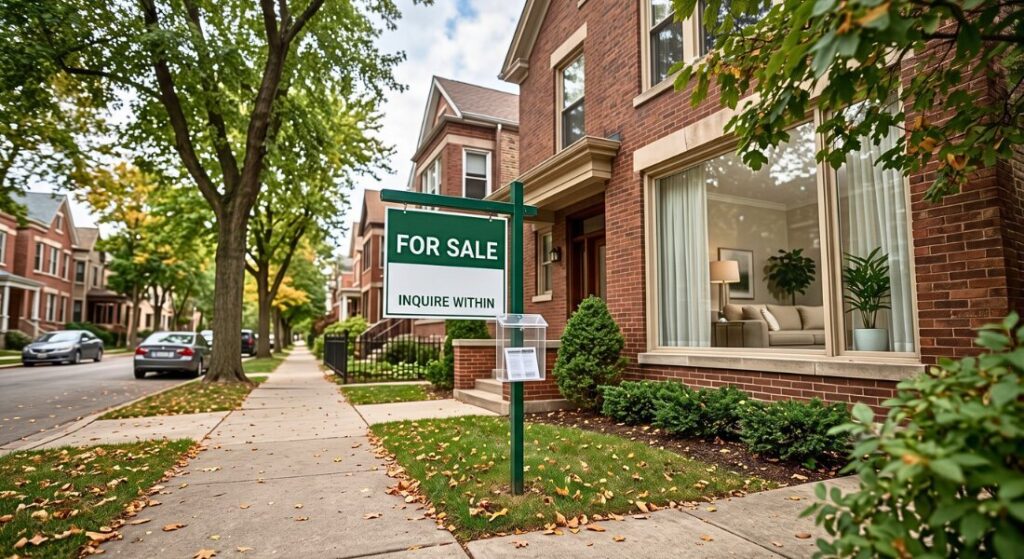
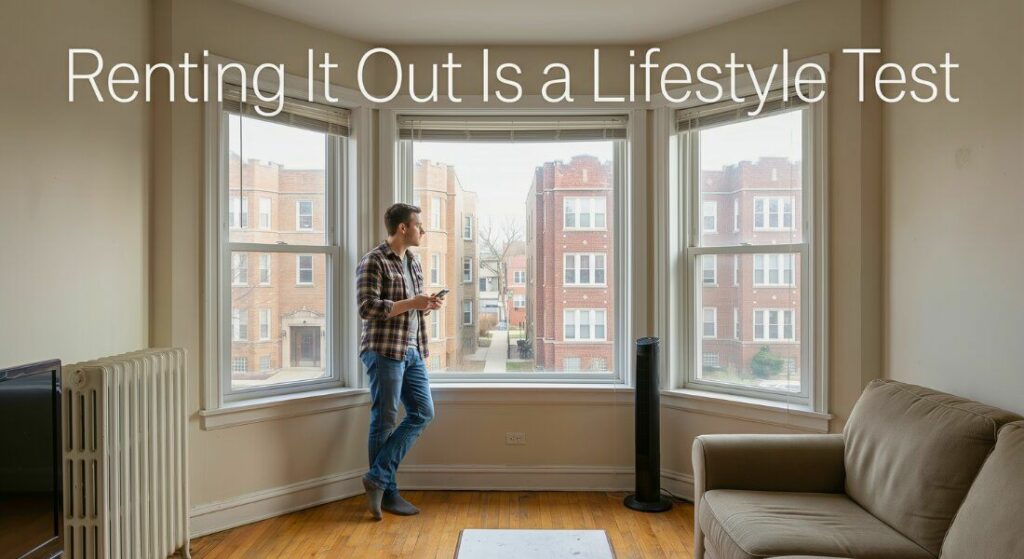
Most Chicago owners debating whether to rent or sell start in the same place. They open a spreadsheet, estimate the rent and then subtract the mortgage, HOA, taxes, and insurance. If the number lands near zero or slightly positive, renting feels like the smarter move.
That logic makes sense on the surface. It’s also where many owners run into trouble. The real question isn’t whether the property cash flows. It’s whether becoming an accidental landlord fits your lifestyle, risk tolerance, and capacity for ongoing responsibility.
In Chicago, renting out a former home is rarely a passive financial move. It’s a long-term commitment that often feels like a second job.
Owners Often Ask the Wrong Question
We hear it all the time. “Maybe we’ll just rent it out for a few years.” The word “just” does a lot of work in that sentence. It downplays what actually follows.
The moment you rent out a property, it ceases to be a neutral asset. You’re no longer holding real estate. Now, you’re running a business.
That business comes with tenants, requirements, maintenance demands, and real financial risk. The math matters, but it’s not the deciding factor.
When owners focus only on the numbers, they erase the human side of the decision. That’s usually where they get caught off guard.
A Chicago Scenario Most Owners Don’t Expect
Imagine renting your condo to a tenant who looks perfect on paper. After a few months, their situation changes. Rent is late. Communication slows. You want to be reasonable, but the arrears grow.
Meanwhile, you still pay the mortgage. The HOA raises assessments for a building project. A maintenance issue appears that you can’t postpone. You call vendors, coordinate access, and cover the costs. The stress follows you into evenings and weekends.
You start thinking about selling, but the unit is now occupied. Showings feel invasive. Timelines stretch. What began as a flexible plan turns into a holding pattern dictated by circumstances.
This scenario is not a far-fetched horror story. It’s a common sequence for owners who rent without fully accepting the responsibilities they signed up for.
Truth 1: Being a Landlord Is a Profession, Not a Side Project
Chicago has countless small, noninstitutional landlords, many of them accidental. They once lived in a condo or single-family home, moved, and assumed renting would be temporary or easy income.
Landlording is not passive. It’s operational. Even at a basic level, it requires business planning, risk tolerance, cash reserves, patience, and management skills.
If you dislike uncertainty, avoid conflict, travel often, or already feel stretched, renting can look good on paper. Even then, it may be the wrong choice. Lifestyle mismatch is one of the biggest drivers of regret we see.
Your personal bandwidth matters as much as projected rent.
Truth 2: Accidental Landlords Underestimate Risk Until It Gets Expensive
Most first-time landlords plan for the best-case scenario. The tenant pays on time, and the property stays in good shape. Costs stay predictable. You sell later without friction.
Real life rarely cooperates. Repairs cost more than expected. HOA finances change, introducing new risks. Utility costs start to climb. Tenants lose jobs. In Chicago and Cook County, even when you follow the rules, enforcing a lease can take time.
Here’s the uncomfortable question most skip. Could you handle three to six months of negative cash flow without panic if something went sideways?
If the answer is no, renting is not a bridge. It’s exposure. Cash reserves are essential. They’re the difference between staying in control and having to decide under pressure.
Truth 3: This Decision Is About Who You Are, Not Just the Market
Many owners get stuck on emotional justifications. “I don’t want to sell at a loss.” “The market might bounce.” “Holding feels smarter.”
Those reactions are human, but they’re not strategies. Your property doesn’t care about today’s pricing. It will still need attention, interrupt weekends, and create liability and responsibility.
A better starting point isn’t “Could we rent it?” but “Do we want the role that comes with it?” Ask yourself whether you want to:
- Be responsible for someone else’s living situation
- Handle enforcement and conflict if needed
- Have the reserves to stay calm during vacancy or repairs
- Fit this role into your life for the next one to three years
Avoiding a tough sale price today can create a much tougher situation later.
Truth 4: Good Agents Reframe the Question to Protect Clients
Many owners want a simple answer: rent it or sell it. The better approach is to slow down the conversation.
An experienced advisor helps you see the full picture by clarifying:
- What landlording requires operationally
- What risk looks like in Chicago
- How does your lifestyle align with that risk
- What could happen if you change your mind later
When owners skip this step, they often underfund reserves, ignore early warning signs, and overreact when something breaks. The worst outcome is not just financial loss. It’s stress and regret paired with a forced decision at the wrong time.
Clarity upfront prevents damage control later.
Truth 5: A Simple Filter That Actually Works
When clients ask whether renting makes sense, we return to a simple filter. Renting works only if you can confidently answer yes to all five criteria:
- You have cash reserves that make vacancy or repairs manageable
- You can tolerate uncertainty and conflict without spiraling
- You have the time or reliable support to handle maintenance and tenant issues
- You are comfortable treating the property like a business
- You accept the risk even if the market doesn’t improve
If you hesitate on any of these, selling is not giving up. It is choosing the path that aligns better with your situation.
Common Questions Chicago Owners Ask
Is renting safer than selling in a softer market?
Not automatically. Renting shifts risk from pricing to operations. If you can handle the operational side, it can make sense. If not, it often amplifies stress.
Can property management solve the lifestyle problem?
Management helps, but it does not remove risk. You still fund repairs, approve decisions, and carry liability.
How much should reserves realistically be?
We usually advise planning for several months of full carrying costs plus a repair buffer. Less than that leaves no margin.
What if I plan to move back later?
Temporary intent does not reduce responsibility. You still operate as a landlord the entire time.
Is Chicago uniquely difficult for small landlords?
Chicago adds layers of regulation, tenant protections, and longer enforcement timelines. Preparation matters more here.
Does selling mean I failed to maximize value?
No. Selling can be a strategic choice that protects time, capital, and peace of mind.
Take Control of Your Chicago Property
MG Group helps property owners weigh rent versus sell and understand the real responsibilities. We guide you to make the decision that fits your lifestyle and risk tolerance.
Contact our team today for a clear, pressure-free conversation and move forward with confidence.