Why Chicago’s Red Tape Keeps Throttling Housing Supply and What Buyers Should Do About It

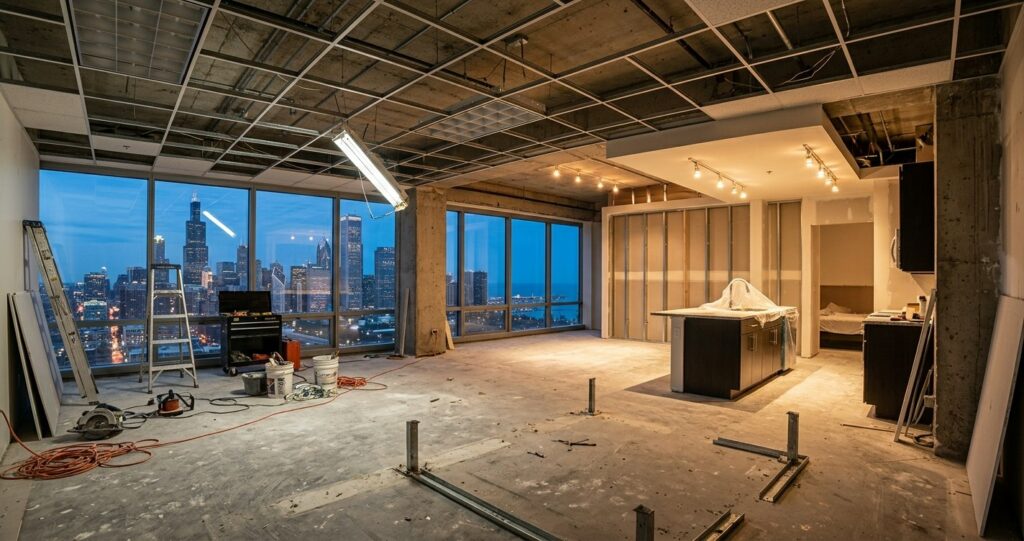
Chicago’s housing supply situation in 2025 and 2026 is not a mystery. It’s a policy execution challenge framed as a shortage.
The city’s ADU ordinance was intended to unlock thousands of new units, but it has not scaled as expected. Infrastructure investments take a decade to influence neighborhood values. And the bureaucratic machinery, shaped across generations of aldermanic politics, is not speeding up under Mayor Brandon Johnson.
For buyers and investors, understanding how the city actually operates is not pessimistic. It’s a competitive advantage.
Mario Greco | Founder, The MG Group at Compass | 24+ years, 5,080+ transactions, $2B+ in career sales | #1 Large Team in Chicago (RealTrends 2024) | Top 1% since 2002 | JD, Boston University | BS Chemical Engineering, Northwestern
What Four Years of ADU Pilot Programs Produced
Chicago’s Accessory Dwelling Unit (ADU) ordinance offered a credible approach to addressing the affordable housing supply gap. Basement apartments, coach houses, attic conversions: the policy had real potential. What it produced was more modest than projected.
The ordinance cycled through multi-year pilot programs, expansions, revisions, and relaunches, which slowed momentum before it reached scale. That pattern repeats across nearly every major Chicago housing initiative.
Aldermanic sign-off requirements, permit backlogs, and zoning negotiations do not appear in press releases. They appear in the timeline.
Mario Greco has tracked this policy machinery across six mayoral administrations. He reads city policy like an engineer reading a stress test. Mario focuses on where the structure actually underperforms, not just where it’s designed to hold.
“They tried. In four or five iterations, they ran a pilot program, then expanded it, changed it, and ran another pilot. Then, finally, maybe, we think, it was launched. Even after launch, the long delays and bureaucratic hurdles have limited its impact. It hasn’t delivered the results we wanted. I don’t foresee Chicago’s red tape easing in any meaningful way anytime soon.” – Mario Greco, Founder, The MG Group at Compass.
That’s not a contrarian take. It’s 24 years of observing Chicago’s policy cycle through real transactions.
The Illinois Housing Development Authority tracks affordable unit production statewide. The gap between Chicago’s projected ADU output and the actual number of permitted units mirrors these observations. Policy design and execution are distinct in this city.
How Infrastructure Announcements Affect Chicago Home Values
Crane counts and capital plans make headlines. Notable projects include the Obama Presidential Center and the United Center district’s $60 to $70 million in land purchases. Other major initiatives include the Bears in Arlington Heights and an $18 billion infrastructure pipeline.
None of these projects is driving significant buyer demand today.
Chicago buyers have learned to wait for delivered reality, not projected timelines.
The city has more aldermen per capita than any comparably sized U.S. city. Every major project requires aldermanic sign-off. Every negotiation introduces delay, pushing the valuation impact further into the future.
The West Loop illustrates this clearly. When Google established its Chicago office a decade ago, actual activity, spending, and demand drove the neighborhood’s transformation, not city plans. The price per square foot reflected reality, not projections. The neighborhood began transforming before any official capital plan claimed credit.
Infrastructure typically affects valuation five to ten years after developers complete construction, not at the ribbon-cutting. Buyers who price in announcements are assuming optionality that may not materialize on their expected timeline.
This dynamic connects directly to how buyers approach new construction versus existing inventory. Understanding where the risk truly lies requires the same discipline: ignore projections and evaluate what’s already built and operating.
How to Read Chicago’s For-Sale Inventory Numbers Correctly
The supply numbers heading into this cycle are tighter than many anticipate. The existing single-family home inventory is approximately 20% below year-over-year levels. Condo inventory is down 18–26% across segments. The LaSalle Loop office-to-residential conversions are adding units downtown, but roughly 90% are rentals, not for sale.
The for-sale market remains structurally constrained. Red tape slowed ADU production and the Loop conversion pipeline. Chicago’s policy machinery created this shortage, one delayed permit and stalled pilot program at a time.
- For data-focused buyers: Track the spread between accelerating rental demand and flat or declining for-sale supply. That gap drives pricing pressure.
- For move-up sellers: The same supply constraint working against buyers works in your favor. Motivated sellers listing in an undersupplied market face fewer buyer options, which supports pricing and shortens time on market.
The Chicago Association of Realtors® publishes monthly inventory data confirming this spread. Pull numbers for your target segment before concluding anecdotal examples.
Not sure how to sequence a sale in a tight-inventory market? Talk to the MG Group team. Timing decisions matter more than most sellers realize.
Which Neighborhood Fundamentals Predict Long-Term Value?
Forget the 2050 plan. Forget the crane count. Focus on neighborhoods with existing amenities and investment. Look for evidence you can measure today: transit access, walkability, retail density, restaurant concentration, and school proximity.
The distinction between acceleration and creation matters when allocating capital. The Google Thompson Center announcement may accelerate the Loop corridor’s residential trajectory. But the theater district was already there, and office-to-residential conversions were already underway. The neighborhood’s fundamentals were already in motion before any announcement added momentum.
Neighborhoods that have not yet built an amenity base rarely receive it on the timeline a capital plan suggests. Neighborhoods with existing amenities tend to retain value through cycles and absorb demand when supply tightens.
What the United Center District and Other Mega-Projects Mean for Adjacent Buyers
Bulls and Blackhawks ownership has accumulated scads of parking lots, vacant land, and distressed buildings around the United Center. The proposed $7 billion mixed-use district has long-term potential for the Near West Side. But it has not yet produced meaningful valuation movement for nearby buyers.
The project remains in the announcement phase, not the delivery phase. Buyers should assess Near West Side fundamentals such as transit access, school quality, and retail density on their own merits today. The United Center project may act as an accelerant, but it is not the foundation.
Buyers weighing dense urban neighborhoods with established amenities versus areas relying on future development face a familiar question. Chicago buyers have confronted it for years. If you’re running a payment sensitivity analysis for a sub-$500K condo near these projects, start with the Q4 buying window analysis. It explains how to time your entry into undersupplied segments without overpaying for the narrative.
Key Chicago Housing Questions Answered
Why hasn’t Chicago’s ADU ordinance produced more housing units?
Multiple pilot programs, revisions, and expansions delayed full launch, eroding developer and owner confidence. By the time the policy stabilized, complex permits, zoning approvals, and aldermanic sign-off had already discouraged many conversions.
Does infrastructure investment increase Chicago property values?
Yes, typically with a five-to-ten-year lag from groundbreaking to measurable impact. Buyers paying premiums for announced projects are pricing in optionality that may not materialize. The strongest signal is investment already built and operating.
How tight is Chicago’s for-sale housing inventory in 2025 and 2026?
Single-family inventory is about 20% below last year. Condo inventory is down 18% to 26% by segment. New residential construction, mostly rentals, does little to address the for-sale gap.
Is it still a good time to sell a Chicago home?
Structural undersupply favors motivated sellers. Limited inventory reduces buyer alternatives, compresses market time, and supports pricing. Sellers who understand equity and sequence their next move are best positioned.
How should I evaluate a Chicago neighborhood for long-term value?
Focus on existing fundamentals: transit, walkability, retail density, schools, and amenity concentration. Analyze what exists, not announced projects. Neighborhoods with proven investment hold value through cycles and absorb demand when supply tightens.
What is the United Center development project, and does it affect buyers nearby?
Bulls and Blackhawks ownership has acquired roughly $60 to $70 million in land and announced a mixed-use district. The project has long-term potential but has not yet moved valuations in adjacent neighborhoods. It remains in the announcement phase.
How does Chicago’s aldermanic structure affect housing development timelines?
Every major project requires aldermanic sign-off, adding time and cost. This structure is a key reason development timelines run longer, and policy announcements take years to translate into supply.
What leading indicator should data-focused buyers track for Chicago pricing pressure?
Track the gap between rising rental demand and flat or declining for-sale supply. Pricing pressure concentrates where rental demand accelerates, and for-sale options remain limited.
Focus on Chicago’s Real Housing Signals
The Chicago housing market rewards people who separate announcements from outcomes. Policy ideas, infrastructure plans, and development proposals all shape the narrative, but only realized supply changes pricing. Buyers and investors who focus on what already exists gain a clearer view of where the real opportunities are.
MG Group regularly analyzes which Chicago neighborhoods have the fundamentals, not just the press releases. Our research provides a data-driven view of where real market signals point in 2025 and 2026. Reach out to Mario Greco and the MG Group to start a market conversation based on numbers, not announcements.