Buy Dirt, Not Air: Why Space Is the Real Currency in Chicago Real Estate
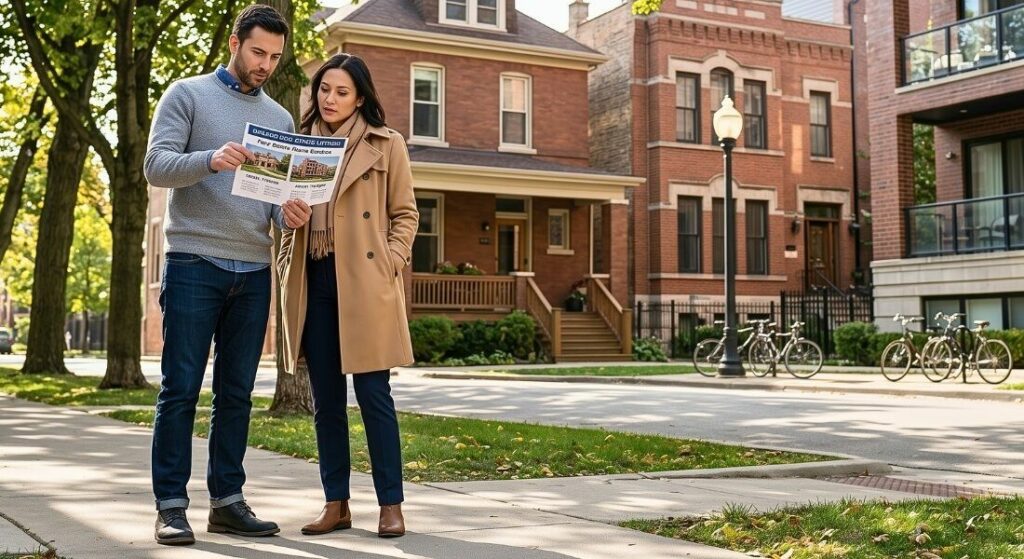
In Chicago’s post-COVID market, both indoor and outdoor spaces have shifted from a preference to a core pricing signal. Buyers who understand the difference between owning land and owning space inside someone else’s building make very different financial decisions. Other buyers treat property type as simply a lifestyle choice.
This guide explains how Chicago’s property-type hierarchy works. It also examines why post-COVID space premiums have persisted. Finally, it shows how to align the new decision with the old decision and your actual reserves and risk tolerance.
Mario Greco | Founder, The MG Group at Compass | 24+ years, 5,080+ transactions, $2B+ in career sales | #1 Large Team in Chicago (RealTrends 2024) | Top 1% since 2002 | JD, Boston University – BS Chemical Engineering, Northwestern
What Property Type Hierarchy Means in Chicago Real Estate
Chicago’s property type hierarchy reflects three concrete variables:
- Shared-wall exposure
- Access to outdoor space
- The difference between owning land and owning square footage inside a shared structure
Single-family homes sit at the top. Townhomes occupy the middle. Condos form the base.
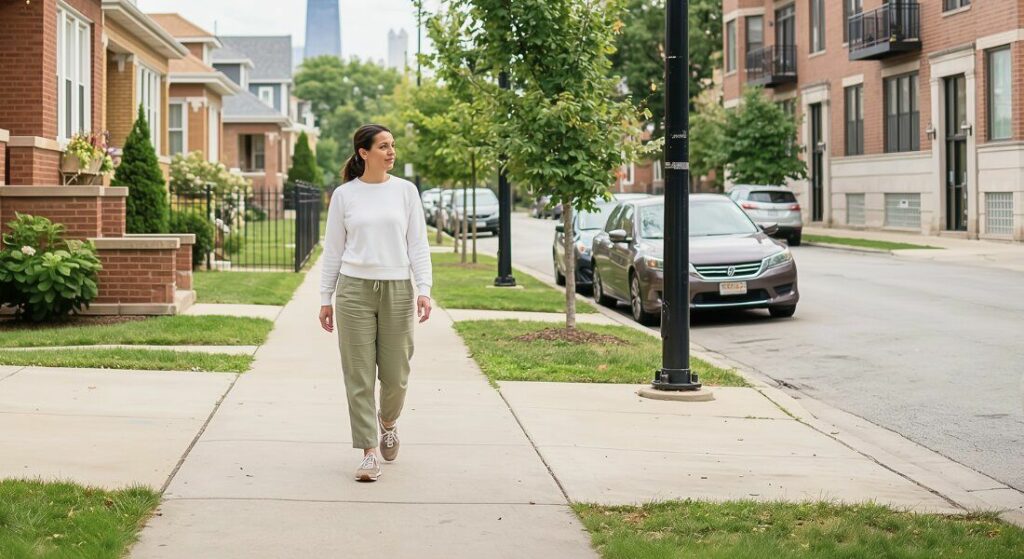
In Portage Park, single-family homes dominate the inventory. In the West Loop neighborhood, the market is almost entirely condominiums. Neither pocket is wrong. They reward different priorities, timelines, and definitions of value. Understanding where you fall before writing an offer is not philosophical. It’s financial.
The Illinois Condominium Property Act governs the shared ownership structure of every condo building in Chicago. When you buy a condo, you hold title to your individual unit. You also share ownership of common elements such as the lobby, roof, and mechanical systems with other owners.
When you buy a single-family home or freestanding townhome, you hold fee-simple title to the land itself. That distinction shapes everything from your equity trajectory to your exit options.
Why Post-COVID Space Premiums Never Retreated
The COVID-era shift from dense urban condos to single-family homes is well-documented nationwide. What receives less attention is that Chicago’s premium for space never fully reversed. It hardened.
Buyers who moved in 2020 and 2021 to capture yards, extra bedrooms, and room to breathe did not reverse course. They accelerated a housing decision by five to seven years, locked in historically low rates, and stayed put. That dynamic pushed motivated sellers out early, creating a persistent inventory gap that Chicago has yet to recover from.
When a property offers meaningful space, buyers are willing to pay more. These features include a private outdoor area, functional square footage, or a layout that fits a home office.
Sellers who captured that premium during COVID have little incentive to give it up. The market now has fewer options and higher carrying costs, which reinforces that advantage.
The downstream effect is measurable. Private outdoor space in high-density neighborhoods like Lincoln Park and Lakeview commands a 5% to 12% premium over comparable units. Post-COVID buyers are willing to pay for outdoor space that functions year-round, not just during summer.
How to Match Property Choice to Your Goals
The space-premium question sounds like a preference question. Mario Greco frames it differently. He has guided buyers through every version of this trade-off across Chicago’s most competitive corridors.
“No matter the property type, buyers pay a premium for indoor and outdoor space, especially post-COVID. Sometimes the decision buyers face is: Do I want a brand-new condominium with all the bells and whistles? Or do I want a single-family home at the same price with a real yard, but that’s 20 years old, and I have to do a little bit of work to it? That is generally a personal decision. It’s kind of a function of how risk-tolerant someone is, how much they want to save, or how much they have saved.” – Mario Greco, Founder, The MG Group at Compass.
That framing removes the false binary of “good buy versus bad buy.” It replaces it with a more precise question: what can you realistically absorb?
A new condo in the West Loop or River North delivers warranties, modern mechanicals, and zero deferred maintenance on day one. Under Fannie Mae condo project review guidelines, lenders assess HOA reserve fund adequacy and litigation exposure before approving financing. That means a well-managed building protects your financing, not just your monthly costs.
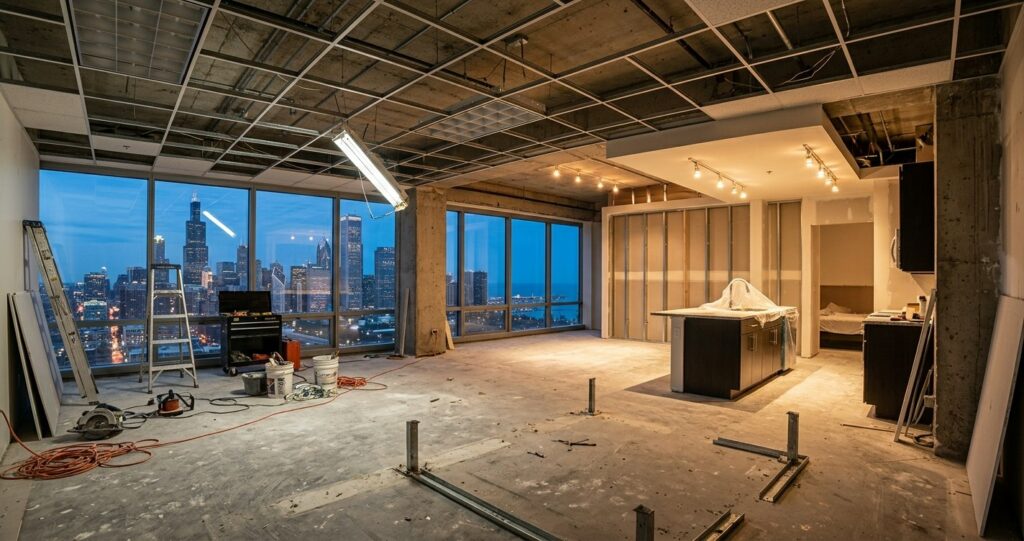
A 20-year-old single-family home in Logan Square or Avondale offers outdoor space, privacy, no HOA, and a renovation list. Neither is wrong. Both require an honest look at your reserves, project management capacity, and how long you plan to stay.
Not sure which property type actually fits your reserves and timeline? Talk to Mario Greco’s team before touring. A 20-minute conversation can shift what you look for and how you evaluate offers.
What Chicago Housing Inventory Data Says About Your Options
For buyers weighing condo entry against single-family aspiration, one figure anchors the decision. As of early 2025, total condo inventory in Chicago sat approximately 26% below year-prior levels. At the same time, existing single-family inventory was down roughly 20% year over year.
These numbers reflect a structurally constrained market where waiting for better options is not a reliable strategy. Mario Greco grounds his market read in pipeline data rather than sentiment. He identifies two forces most analysts treat separately:
“If sellers are going to hit the market, they’re doing it for a life change. It’s not an optional move like it was during COVID. COVID accelerated sellers’ timeline. People who were going to move in the next five to seven years during COVID decided to move then. And I think we still haven’t recovered from that. On top of the interest rates they locked in being as low as they are, those two things are conspiring against inventory actually increasing.” – Mario Greco, Founder, The MG Group at Compass.
For buyers, that context reframes the new-versus-old trade-off entirely. Sellers are not listing unless life forces them to: divorce, job relocation, or an estate settlement. Optional moves are rare.
The rate-lock effect and the COVID-era supply pull-forward are not reversing. The question is which compromise aligns with your reserves, timeline, and tolerance for project risk.
You can track broader national housing supply trends through HUD’s Office of Policy Development and Research. Chicago’s structural constraints, however, run deeper than the national picture suggests.
Three Ways to Think About the Space vs. Price Decision in Chicago
Buying For a Decade or Longer
Single-family land in a Chicago neighborhood with existing retail, walkability, and school access is the strongest long-term hold. Maintenance risk is real. Depreciation risk is lower. Appreciation upside in transitional corridors like Pilsen, Avondale, and South Shore has outpaced condo appreciation in the same zip codes.
For buyers eyeing transitional neighborhoods, our article on Chicago’s 2025 real estate policies offers context on how regulatory shifts affect appreciation.
Wanting Space Without the Project List
A townhome threads the needle. They have shared walls, but typically a private rooftop or rear outdoor space, multi-floor living, and no elevator assessments. The trade-offs are clear from the start, making planning easier than dealing with an aging single-family home.
Timeline or Budgets as the Primary Driver
A new condo with deeded parking, modern HVAC, and in-unit laundry in a transit-accessible neighborhood can be a strong entry point for wealth building. It’s especially valuable compared with continuing to rent while waiting for a scarce single-family opportunity.
Buyers evaluating condo-specific risks, including HOA finances, special assessments, and litigation, should read what Chicago buyers miss about condo buildings. It helps buyers understand potential pitfalls before making an offer.
Reserve fund adequacy deserves specific attention for any condo purchase. Under Section 22.1 of the Illinois Condominium Property Act, sellers must provide financial statements and reserve fund data before closing. Buyers who skip this analysis are pricing the asset without pricing the liability.
Your Chicago Property Questions, Answered
What does “buy dirt, not air” mean in Chicago real estate?
The phrase highlights that owning land, like a single-family home or townhome, typically builds more durable equity than owning a condo. In Chicago, “air” refers to a condo unit in which you own your interior space, but an HOA owns the land. “Dirt” means fee-simple ownership of the land itself.
Is a condo still a good investment in Chicago right now?
A condo can be a sound investment depending on location, HOA health, and your timeline. As of early 2025, condo inventory was roughly 26% below year-prior levels, supporting prices in well-located buildings. Key variables include HOA fees, pending assessments, reserve funds, and rental restrictions.
How much more do Chicago buyers pay for outdoor space?
Private outdoor space, including yards, rooftop decks, or rear decks, consistently commands a premium. In high-density neighborhoods like Lincoln Park and Lakeview, private outdoor space can add 5% to 12% to a property’s value. The premium depends on size, usability, and exclusivity.
What is the current state of single-family home inventory in Chicago?
As of early 2025, single-family inventory was down about 20% year over year. Rate lock drives the low turnover. Owners with 2.75% to 3.5% mortgages from 2020 to 2021 have little incentive to sell. It’s also driven by COVID-era demand pull-forward, which accelerated many housing decisions.
How do I decide between a new condo and an older single-family home at the same price?
Consider three factors: your cash reserves, renovation capacity, and intended hold period. A new condo has predictable costs and minimal upfront work, but limited flexibility and equity growth tied to HOA health. An older single-family home offers land, privacy, and no shared governance, but you must account for deferred maintenance. Thin reserves favor a condo; strong reserves and a long timeline favor a single-family home.
Which Chicago neighborhoods have the best single-family home inventory right now?
Portage Park, Jefferson Park, and Norwood Park offer more single-family inventory, larger lots, detached garages, and move-in-ready options at accessible prices. Transitional neighborhoods like Pilsen, Avondale, South Shore, and Bridgeport offer lower entry prices with higher appreciation potential.
What is a townhome’s advantage over a condo or a single-family home?
Townhomes balance space and maintenance. They offer multi-floor living, private outdoor space, and greater ownership than a condo, without the full maintenance of a detached home. Trade-offs include shared walls and HOA fees, which are usually lower than those for high-rise condos. For buyers seeking space and privacy without renovation risk, townhomes often provide the best lifestyle-to-maintenance ratio.
Why is Chicago’s housing inventory still so low years after COVID?
Inventory remains constrained by two structural forces. First, the rate-lock effect keeps owners with low mortgages from selling. Second, COVID accelerated moves that would have occurred over the next five to seven years, draining near-term seller inventory. Until rates normalize or life-event sellers enter the market, inventory constraints are likely to persist.
What Your Budget Buys in Chicago Right Now
The new-versus-old question has no universal answer. It depends on your reserves, renovation bandwidth, and honest read on how long you plan to stay.
Schedule a 20-minute strategy session with MG Group to explore your options across property types in your target Chicago neighborhoods.